










CLICK HERE TO JOIN OUR WHAT’S APP GROUP

Why the Caribbean must choose justice over false peace
CLICK HERE TO JOIN OUR WHAT’S APP GROUP

By Professor C. Justin Robinson
Pro Vice-Chancellor and Principal, The UWI Five Islands Campus
Everyone is crying out for peace, yes,
None is crying out for justice.
Everybody want to go to heaven,
But nobody want to die.
Peter Tosh, Equal Rights (1977)

That warning, from half a century ago, frames everything that follows.
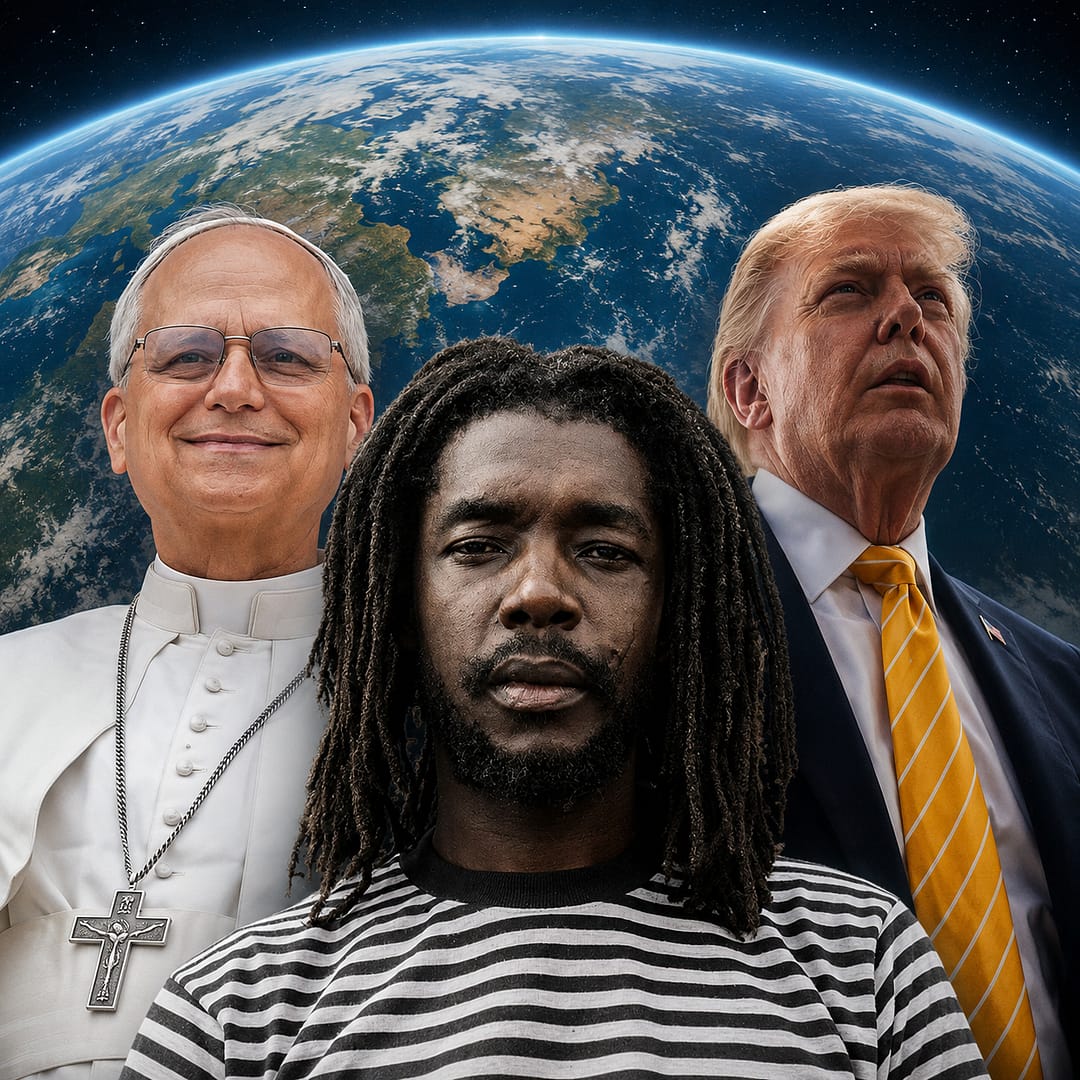
When Pope Leo XIV warned that nations arming themselves before negotiating are preparing for a greater war, Washington called him disgraceful.

The Pope spoke of justice, Washington spoke of strength. Between them stands the ghost of Peter Tosh, who understood, before either of them spoke, that dominance is not peace, surrender is not peace, both are war paused, waiting for the next generation to inherit the bill.
Washington offers domination, silence imposed by the stronger. The Pope, like Tosh, demands justice, the costly, disruptive, unglamorous work without which no ceasefire holds.
The Caribbean has lived under both and we must choose.
Consider the Strait of Hormuz, thirty-three kilometres wide with twenty percent of the world’s traded oil passing through it. A closure leads to a spike in energy prices that can break the most vulnerable economies first. The Caribbean imports nearly all its fuel; our tourism, our aviation, our food chains are acutely price-sensitive and structurally exposed.
Lloyd Best taught us to read this exposure as architecture, not accident, when he said the plantation economy did not end, it adapted. Our vulnerability to a closure ten thousand kilometres away is the inheritance of an economy organized, from its origins, for someone else’s account.
The U.S.–Israel confrontation with Iran, now in its seventh week with talks stalled, is not distant drama. We are not watching this war; we are inside it. Economic exposure does not automatically confer moral authority.
But silence in the face of structurally determined vulnerability is not neutrality, it is acquiescence. Our exposure is not incidental, as Lloyd Best taught us it is the design of an economy we did not author.
Gaza, Sudan, Ukraine, these are not separate tragedies, they are the same tragedy recurring, and the recurrence has a structure.
The world is offered, again and again, not peace but two kinds of silence. The first is dominance where the stronger party takes enough that resistance becomes impossible.
The bombed are not at peace, they are exhausted. The second is surrender where the weaker party signs unjust terms because it can no longer afford to refuse. Both are called peace, neither is.
The Treaty of Versailles punished Germany without addressing the war’s causes, and twenty years later the world burned again.
The Oslo Accords, as critics have long argued, tried to build a Palestinian state on paper while leaving the occupation intact; today, Gaza is rubble.
The Taif Agreement ended Lebanon’s civil war by redistributing power among the same factions that produced it and the country has lurched from crisis to collapse ever since.
This pattern is not coincidence, it is arithmetic. Injustice deferred is war with interest, and the interest compounds with each generation. Peace is what we say we want, but justice is what we keep refusing to pay for. The bill always comes due, and it is rarely paid by those who incurred it.
For the Caribbean, this is memory, not theory.
The plantation was peaceful, in that sense. Colonial order was peaceful, in that sense. The silence of the dispossessed has been called peace in this region many times, and we know exactly what it cost. We, of all people, have no excuse for mistaking managed injustice for peace.
But Tosh understood something harder still. In that same song he offered another observation, sharp as a blade: “Everyone wants to go to heaven, but nobody wants to die.”
We want the arrival without the passage; Easter Sunday without Good Friday. We want peace, most of us genuinely do, but we flinch from the hard, disruptive, costly work of justice on which lasting peace depends.
Justice is Good Friday work.
It demands discomfort, sacrifice, the willingness to disturb arrangements from which we quietly benefit. So, we settle, repeatedly, for the peace of dominance and the peace of surrender, because they are cheaper in the short run. We keep choosing the interval, and we keep inheriting the next war.
So here is Tosh’s question, the one the song was really asking: Do we want peace because we believe in justice, or because war is inconvenient? Do we recoil from Gaza because our conscience is troubled, or because the oil price spike hurts our hotels?
Are we crying out for peace, or for the return of our comforts?
Washington’s answer is on the record, with surrender and dominance driven ceasefire resolutions and massive military buildups.
The Pope has been dismissed as disgraceful for insisting that justice precedes peace.
The Pope’s answer is equally clear; peace is the work of justice. But Tosh’s answer remains the fullest, equal rights and justice for everyone, not only for those whose suffering is convenient to notice.
And so, the Caribbean must speak, not through communiqués alone, but through the voice of its people. To say “the Caribbean” is not to pretend we are of one mind.
It is to insist that our shared exposure demands a shared voice even where unity is hard.
We have done this before. On climate justice, we refused the terms of those who caused the damage.
We named the injustice before asking for the remedy. That same moral architecture is required now, applied to war, occupation, and the selective enforcement of international law.
The Caribbean people must demand three things. First, that any ceasefire be judged not by the silence it produces, but by whether accountability is binding for all parties and not suspended the moment the violator is an ally.
Second, that reconstruction never be used as leverage for silence: no rebuilding without rights. Third, that amnesty never come before truth. Justice deferred is the next war scheduled.
This voice will cost us. It will cost diplomatic capital and the comfortable neutrality some seek at this cruel and dangerous moment, the quiet approval of powers whose favour we have learned to cultivate, sometimes against our own interest.
But the alternative, crying out for peace while endorsing the structures that guarantee its failure is precisely what gave us Gaza, Sudan, and a closed Strait.
It has never worked, it cannot work, it is not designed to. Might is not right, and peace built on it is always temporary and always someone else’s burden when it breaks.
If the Strait stays closed, oil spikes further and air travel becomes unaffordable, no one will airlift us to safety. We will bear it, as we have borne every cost not of our making.
So let us at least stand for something that outlasts the bearing.
“I don’t want no peace,” Tosh sang. “I need equal rights and justice.” Washington calls the Pope disgraceful. Tosh, from his grave, calls them both to account.
The Caribbean people have always known which voice echoes from the marrow of our history.
The question is whether we will sing it again loud enough, in time, and not as petitioners, but as free people naming justice on our own terms.
CLICK HERE TO JOIN OUR WHAT’S APP GROUP
CLICK HERE TO JOIN OUR WHAT’S APP GROUP
CLICK HERE TO JOIN OUR WHAT’S APP GROUP
CLICK HERE TO JOIN OUR WHAT’S APP GROUP
CLICK HERE TO JOIN OUR WHAT’S APP GROUP
CLICK HERE TO JOIN OUR WHAT’S APP GROUP
CLICK HERE TO JOIN OUR WHAT’S APP GROUP
CLICK HERE TO JOIN OUR WHAT’S APP GROUP
CLICK HERE TO JOIN OUR WHAT’S APP GROUP
CLICK HERE TO JOIN OUR WHAT’S APP GROUP
Advertise with the mоѕt vіѕіtеd nеwѕ ѕіtе іn Antigua!
We offer fully customizable and flexible digital marketing packages.
Contact us at [email protected]




Peter Tosh is the only rasta to this date that has ever smoked a chalice in Buckingham Palace. I remember being in the UK in 1983 when that historic event took place.