









CLICK HERE TO JOIN OUR WHAT’S APP GROUP

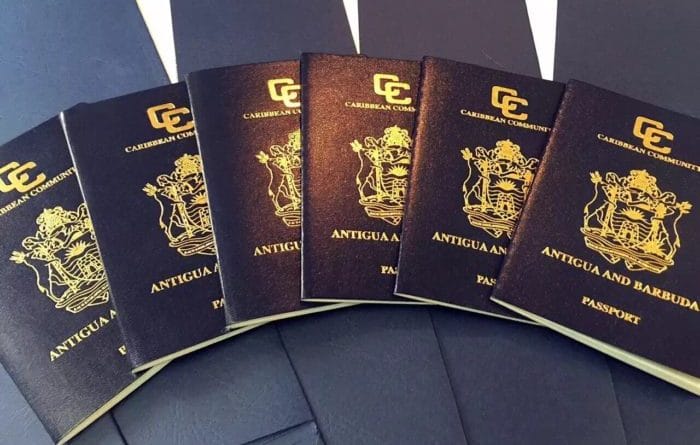
Antigua and Barbuda is among five Caribbean states named as operating what the EU describes as “large-scale” programmes, alongside Dominica, Grenada, Saint Kitts and Nevis, and Saint Lucia.
The Commission says these schemes present a “significant and ongoing challenge” to EU border security.

More than 100,000 citizenships have been issued across the five countries.

The report notes that Antigua and Barbuda has a rejection rate of about 1.7%, which it says raises concerns about the strength of screening processes.
Regional governments have introduced reforms, including a minimum investment threshold of US$200,000, enhanced due diligence and greater information sharing.

However, the Commission says these measures do not remove the risks and insists stricter checks must continue while the programmes remain in place.
Under revised rules, the EU can begin a staged process that could lead to visa-free access being suspended. The Commission points to Georgia, where diplomatic visa-free travel is due to be removed, as an example of how sanctions could be applied.

Citizenship-by-investment revenues play a key role in Antigua and Barbuda’s economy, helping to fund infrastructure, debt reduction and climate resilience projects. Any loss of visa-free travel could reduce investor demand and affect public finances.
The report reiterates that closer integration with the EU is incompatible with investor citizenship schemes, citing a recent European court ruling against Malta’s programme.
While no timeline has been set, the Commission says further action could follow. Caribbean governments are expected to defend the programmes, arguing they support development and meet international standards.
CLICK HERE TO JOIN OUR WHAT’S APP GROUP
CLICK HERE TO JOIN OUR WHAT’S APP GROUP
CLICK HERE TO JOIN OUR WHAT’S APP GROUP
CLICK HERE TO JOIN OUR WHAT’S APP GROUP
CLICK HERE TO JOIN OUR WHAT’S APP GROUP
CLICK HERE TO JOIN OUR WHAT’S APP GROUP
CLICK HERE TO JOIN OUR WHAT’S APP GROUP
CLICK HERE TO JOIN OUR WHAT’S APP GROUP
CLICK HERE TO JOIN OUR WHAT’S APP GROUP
CLICK HERE TO JOIN OUR WHAT’S APP GROUP
Advertise with the mоѕt vіѕіtеd nеwѕ ѕіtе іn Antigua!
We offer fully customizable and flexible digital marketing packages.
Contact us at [email protected]




The screening rate is low because there are pre-screenings way before the application reaches the CIU by the brokers and licensed agents.
What happens to the recent social security investment into Jolly Beach if this program ends?
I hope the governments are working on tightening the requirements for CIP approval
I would admit that I am a proponent of the CIP. Our collective country’s cannot survive solely on the taxes that is collected from citizens. Our needs are far greater than the taxes that we collect. Dilapidated infrastructure, medical needs at a time when costs are astronomical, education needs and more, demands a lot more money. Our governments are forced to come up with innovative ways to meet cost and prevent a total collapse of our economies. The CIP is workable but we have to make necessary adjustments if we are to be acceptable and stay out of trouble. Whilst it is important to make lots of money, it is better to err on the side of caution and make less money with a well regulated and acceptable program than to have a program that causes us endless problems. For the next 3 years, our CIP would be heavily scrutinized by both the US, the EU and others. As Kenny Roger’s said in his Gambler song, ” we have to know when to hold them, when to fold them, when to walk away and run ” We need to better learn the secret to survival.
I personally think it is the begin of the end of these programmes. No countries is going to put their security at risk especially in time like these.
I don’t know why the government insist on bringing hardship on average citizens through the CIP programs. Its lack of creativity and innovation and more about corruption why they do not want to let go of these programs. They are not sustainable.
I look forward to CIP dying. It’s a divisive, dishonest and ultimately financially ruinous way to make the country’s books ‘seem’ balanced.
@Pre-screening… how does that make sense to you? Are you still in pre-school?
Did anybody in government actually anticipate this? Looks like we were sleeping.
you all tink that we can compeete with Trump million dollar visa program?
U MAD or what???
Anthony Stuart was right. I would like to here these words along with an apology coming from the former PM who fired him
Anthony Stuart was right. I would like to hear these words along with an apology coming from the former PM who fired him
These intellectually lethargic political leaders we have better get sense in their heads, just as how they can sell off the countries sovereignty to criminals and empower them with buffer zone and concessions, it would be dam well better to empower every Antiguan barbudans citizens that goes back three generations with lands on those same beach fronts and let them run tourism business and have the entire country using their creative hospitality service to benefit the country and generate tax income for government, all like Shirley heights can take small shops and amusement rides run by local Antiguans, I have seen it that when a white person desire our national park for their private residence it is granted, albeit with make up stories about royal family wants their home built in Barbuda bird sanctuary, and some white people have a slide ride at fig tree drive that tourist and local patronize and another have stingrays captured in our shallow marine area for tourist attraction and making monies, but the effort is not shown by the government for black empowerment, during upp time in office a lot of small business sprang up, if this ALP government headed by Gaston had that love for local black citizens he would have encourage local business, but instead he all about the country chasing away small business from the beaches, breaking down their business place and using the police as political enforcement. In Nassau Bahamas on bay street where the cruise ship docked a mere 5 minutes walk, the government allow the locals to set up shops and restaurants on the white sand beach, the government put in bathroom and change room infrastructure and utilities like light and water and sewage system is provided, the government get taxes from these business, rather than been held hostage by PLH and mill reef and jumby bay like how Stanford had us in the past like moody Stuart did in cane and cotton, use a more creative business model to generate these tax revenue from a more distributed business sector than a monopoly type business that could make demands on the government for concessions. This passport and beach front lands sale is not sustainable, it destroys the local future entrepreneurship of our future generation and subject them to menial jobs and small pay a continuation of abject poverty. I was never for no passport sale when UPP touted the idea, had they stayed in office longer though they were not reckless and corrupt as Gaston, this passport issue would have brought them trouble. The onliest way out is to empower the people to create wealth and government get taxes from it, with the business in the hands of the private sector and as mentioned local by three generations, it’s hard for sanctions because the government hands would be clean and it would become everyone interest to see the tourist are safe since they are the business owners.
The ALP opposed the CIP and promised to garbage it whenever they took the government. They are on their twelfth year and the program that has been their lifesaver has now become their biggest heartache. Their dishonesty has finally found them.
Do we realistically believe this CIP programs would have lasted forever? I am very impressed that it lasted this long. The problem is we do not have anything to show for the billions. Also the CIP laws calls for all the names of people that have received or about to receive our passports be tabled in parliament. We do not know a single person that has been issued our passport , well except the Indian fugitive that was kidnapped and taken to Dominica. ( Choksi)
Our miss management of funds , the waste of financial resources , the overpriced contracts enriching a chosen few, not following the tendering process , the wasting of fuel by government equipment and these days rental equipment, equipment rented by PWD and parked more than in use.The wasting of expensive imported pitch and road construction materials. They patch today and tomorrow it wash out with a little rain.
They are those that are being enriched by the program directly, with exorbitant salaries and commissions. We need fiscal management. The government needs to be accountable to the tax payers of the country. The civil servants in high positions also behave likewise, following the politicians. Like they are not accountable to anyone. Time to stop wasting our financial resources and I am sure we can do without the CIP thorn in our flesh.
The revocation of the European Union visa free travel is coming soon. The EU does not send out a warning like this unless it has a plan to revoke the visa free status. Right now Antiguans need a visa to go to Canada, we can no longer apply for USA visas and it looks like EU visa free travel will shortly be removed. I hope the CIP money is worth it!
“The EU’s revised visa revocation legislation was published in the Official Journal of the European Union on December 11, 2025, officially making it law; the regulation enters into force 20 days later, around December 30, 2025 enabling the EU to suspend visa-free travel more easily for countries with migration or security issues.” The EU now has the power to revoke our visa free status as of December 30, 2025. Watch out!
According to my grandma…Well look is now we finish
Europe wants the benefits of our tourism and trade but none of the responsibility. This feels like bullying of small Caribbean nations.
Two (2)members of the Seven
Headed Beast now raise ugly
heads against the Caribbean
and CARICOM lookout for the
other five (5)one by one I say
no more.
Visa-free travel is a privilege, not a right. If the programme poses risks, reforms must continue aggressively.
I love to travel to different countries around the world. However, if some of these countries believe that our CIP is a threat to their security borders, then all we need to do is revamp our program or stay in our small hole called Antigua and Barbuda. I remember Lennox Weston and others picketing and said that our passport is not for sale.
Low rejection rates are a red flag. We must ensure only credible, vetted applicants receive our passports.
If Antigua loses visa-free access to Europe, our economy will take a huge hit. Government must take this seriously and defend our interests.
It is quite clear that this CIP program was initially implemented forthe relevant parties to get rich, because tell me one thing that you point to that was a direct result of the CIP.
It is the most corrupt immigration methods that has been ever enacted in Antigua and the other CIP nations.
And I will go further and say that the CIP has also influenced and has corrupted Caricom in a sense.
Comments are closed.