










CLICK HERE TO JOIN OUR WHAT’S APP GROUP

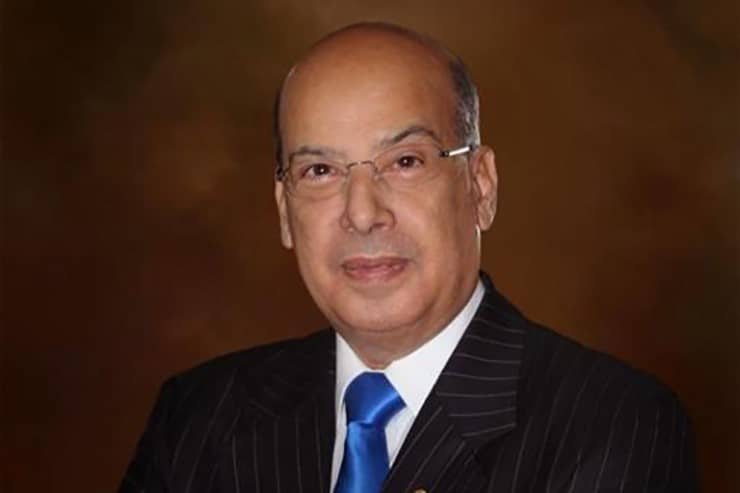
By Sir Ronald Sanders
Migration policy is a matter of sovereign control. Governments assert, rightly, their authority to regulate borders, determine who may enter, and enforce their laws.

The United States has that right, as does every sovereign state. All Caribbean governments also regulate entry to their countries. While they welcome visitors, they impose visa requirements on some nationalities and limit how long visitors may remain.
That is normal state practice.
The difficulty begins when the assertion of sovereignty by one state imposes disproportionate obligations on others.

That is the question now confronting the Caribbean and other resource-constrained developing states.
They are being asked by the United States to receive persons who are not their nationals and whom the United States wishes to deport.

Such arrangements have been publicly acknowledged.
Panama said in February 2025 that it had received 119 migrants of multiple nationalities from the United States as part of an agreement, with 360 expected on three flights.
Costa Rica received its first such group in April 2026 under an agreement that allows up to 25 people per week.
Paraguay announced in April that it would receive an initial group of 25 under a migration cooperation agreement.
El Salvador has publicly agreed to receive certain deportees from the United States for a fee and to detain them in a specially designated prison facility.
These arrangements differ in form, but together they show that the policy is already being put into operation.
Public reporting and independent policy trackers indicate that several Caribbean governments have been approached to accept persons whom the United States wishes to deport.
At least three Caribbean states have already agreed in some form, often without the full terms being made public.
The Migration Policy Institute has noted that many of these agreements have not been published and that, in numerous cases, it is still unclear what exact obligations receiving states are assuming.
A draft of an agreement to operate this arrangement is now circulating in the region.
It illustrates the concern. It contemplates the transfer of a specified number of persons each month, gives only 72 hours’ notice of such transfers, and says that background and criminal information will be supplied only “if available” or “to the extent known” to the United States.
It also states that the operating procedures do not commit U.S. financial resources. The receiving country is expected to regularise, in some form, the status of these deportees from the United States.
If any sending state retains broad discretion over who is sent, how much information is shared, and provides no binding commitment to meet the costs of settlement, while the receiving state must absorb the consequences on arrival, then a small country is no longer simply cooperating.
It is being asked to shoulder substantial elements of another state’s migration policy with its own institutions, social services, public order systems, and political capital. For large countries, these may seem manageable matters of administration.
For small island and coastal states, they are not. They can generate unemployment pressures, social strain, severe stress on public services, tensions between nationals and new arrivals, and, over time, changes in the demographic character of the country.
There is a further humanitarian dimension. M
igrants sent to third countries have no family ties there, may not speak the language, and may arrive with uncertain legal status and no clear path forward.
Reuters reported in March that the U.S. third-country policy permits removals where officials say they have diplomatic assurances or where migrants have received as little as six hours’ notice.
Litigation continues in the United States over whether that satisfies due process. Even if the courts eventually uphold parts of the policy, the humanitarian cost will still fall somewhere. Increasingly, that “somewhere” will be the countries that accept the deportees.
Resolving this issue should not be a matter of conflict with authorities in the U.S. Instead, it requires genuine understanding of the enormity of the problem that can be created for under-resourced countries.
The United States is entitled to decide who may enter and remain in its territory.
It is not unreasonable for Caribbean states to insist, with equal clarity, that they too are entitled to decide whether they can responsibly accept non-nationals from elsewhere, if at all, on what legal basis, for how long, at whose cost, and with what safeguards.
That is not hostility. It is prudence. It is also respect for law.
It reflects basic, long‑standing principles of how states deal with each other. The Caribbean remains ready to work with the United States on migration challenges, but cooperation must be designed in a way that both sides can sustain.
If the United States wishes Caribbean cooperation in this arrangement, it is only fair that the terms be agreed, the legal status of any person received be clear, the costs be fully covered, and vetting be thorough.
The right of the receiving state to refuse, suspend, or terminate should be explicit and unconditional.
Above all, this burden cannot simply be pushed onto states that lack the capacity to carry it safely or humanely, particularly as they are already burdened with maintaining their own people in difficult and worsening economic circumstances.
The Caribbean has always shown goodwill. However, the region’s absorption capacity is limited.
So, too, is its resilience, which is already under severe stress from external shocks arising from extreme weather events, wars in the Middle East and Europe, rising prices, and limited access to financial markets.
The Caribbean already accepts the return of its own nationals from the United States.
That is one thing. The organised reception of deportees who are not its nationals is quite another, and it cannot become a standing expectation unless arrangements are devised that do not impose unbearable weight on small countries that are already overburdened.
(The writer is Antigua and Barbuda’s Ambassador to the U.S. and the OAS. He is also Chancellor of the University of Guyana. The views expressed are entirely his own).CLICK HERE TO JOIN OUR WHAT’S APP GROUP
CLICK HERE TO JOIN OUR WHAT’S APP GROUP
CLICK HERE TO JOIN OUR WHAT’S APP GROUP
CLICK HERE TO JOIN OUR WHAT’S APP GROUP
CLICK HERE TO JOIN OUR WHAT’S APP GROUP
CLICK HERE TO JOIN OUR WHAT’S APP GROUP
CLICK HERE TO JOIN OUR WHAT’S APP GROUP
CLICK HERE TO JOIN OUR WHAT’S APP GROUP
CLICK HERE TO JOIN OUR WHAT’S APP GROUP
CLICK HERE TO JOIN OUR WHAT’S APP GROUP
CLICK HERE TO JOIN OUR WHAT’S APP GROUP
Advertise with the mоѕt vіѕіtеd nеwѕ ѕіtе іn Antigua!
We offer fully customizable and flexible digital marketing packages.
Contact us at [email protected]