










The Power of Local Signals

In the St. Philip’s North constituency, the recent by election revealed a result that is decisive yet nuanced. Randy Baltimore of the Antigua and Barbuda Labour Party received nine hundred and twenty-four votes, representing sixty-nine point four two percent of ballots cast. Alex Browne of the United Progressive Party secured four hundred and seven votes, thirty point five eight percent, creating a margin of five hundred and seventeen votes. Voter turnout reached sixty-seven point two seven percent of registered voters.
The numbers suggest control and organizational strength. Yet in a single constituency, each act of engagement or disengagement carries amplified meaning. Victory captures preference. Turnout measures commitment. Authority expanded, but connection contracted.

“Margins can measure dominance. Turnout measures belief.”

The Engagement Deficit Effect
This byelection illustrates the Engagement Deficit Effect, a phenomenon in which political power consolidates while meaningful participation declines. Authority grows faster than engagement, creating a widening gap between control and legitimacy.

Nearly one-third of registered voters withheld their participation. Their silence is not indifference. It is unclaimed attention. In a small constituency, every non-vote carries disproportionate influence. Absence signals judgment rather than rejection and forces parties to reassess how they engage citizens at a personal and practical level.
“The quietest constituents often hold the loudest power.”

Momentum and Microcosms of Power
Political momentum behaves like inertia. The opposition’s near-success in a previous election created expectations of breakthrough. The five hundred and seventeen vote deficit illustrates the reversal of that momentum. Choosing not to vote communicates judgment. Available choices failed to inspire sufficient confidence to act.
The governing party’s machinery performed effectively. Baltimore’s victory reflects coordination, discipline, and message alignment. Yet in microcosms of power, authority without engagement carries fragility. Every non-voter represents an opportunity lost to reinforce legitimacy.
“Winning the vote does not guarantee winning the belief.”
A Strategic Lens for Leadership
Even within a single constituency, broader lessons emerge. The Power Engagement Matrix provides clarity. It categorizes outcomes by the alignment of political authority and citizen participation. High power with high engagement produces enduring legitimacy. High power with low engagement creates fragile dominance. Low power with high engagement signals imminent disruption. Low power with low engagement results in system drift.
St. Philip’s North falls into the high power, low engagement quadrant. Operational strength is clear. Engagement remains conditional. Recognizing this gap allows leaders to act with foresight rather than reaction.
Actions for Leaders
Leaders must treat disengaged voters as a primary constituency. Their eventual return will determine durability. Operational efficiency must translate into visible and measurable outcomes. Legitimacy should be reinforced through listening and responsiveness rather than electoral victory alone. Internal mechanisms for critique and accountability must be institutionalized to maintain performance when external pressure is low.
“Leadership is strongest when it earns attention, not when it commands it.”
Silence as Strategic Insight
In small constituencies, each vote matters, and every non-vote carries a message. Silence is not absence. It is latent influence. Those who withheld participation in St. Philip’s North left a signal. Authority alone cannot sustain commitment. Connection is essential.
Leaders who recognize this, and act to translate quiet attention into engagement, do more than win elections. They shape the conditions for enduring influence. The next shift will not be decided at the ballot box. It will emerge in the quiet deliberation of citizens who weigh whether their participation carries meaning.
“The next election is already underway in the minds of those who stayed home.”
“The leader who listens to silence will shape the future more than the one who shouts the loudest.”
Editor’s Note
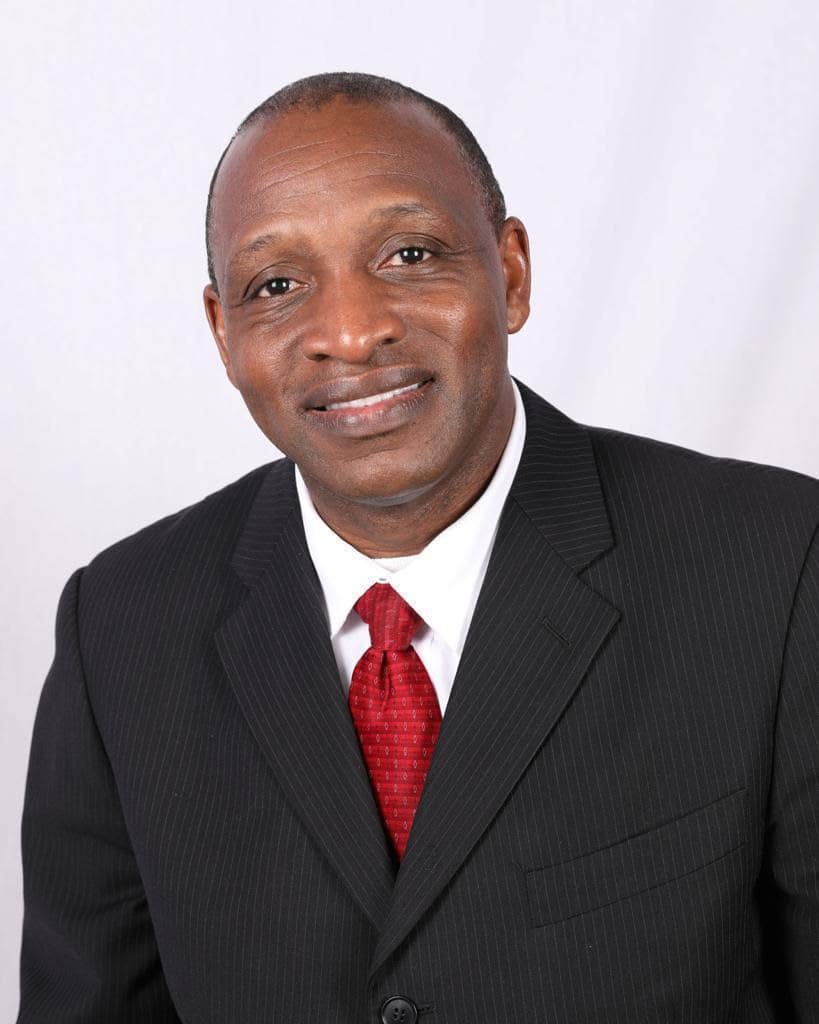
Dr. Isaac Newton is a leadership strategist, educator, and public speaker specializing in governance, institutional transformation, and ethical leadership. Trained at Harvard, Princeton, and Columbia, Dr. Newton brings a multidisciplinary perspective to leadership development across the public, private, academic, and faith-informed sectors. He is the coauthor of Steps to Good Governance, a work exploring practical frameworks for accountability, transparency, and institutional effectiveness. Dr. Newton has designed and delivered seminars for corporate boards, educators, public officials, and community leaders throughout the Caribbean and internationally. His work integrates insights from leadership research, psychology, public policy, and ethics to equip leaders to guide institutions through uncertainty with clarity, courage, and measurable impact.
Advertise with the mоѕt vіѕіtеd nеwѕ ѕіtе іn Antigua!
We offer fully customizable and flexible digital marketing packages.
Contact us at [email protected]




Interesting article..
I hope the red machine reads this.
I can’t put my finger on it, but this win reads hallow to me..
Those transfers seems suspect🤔
Labor party in my opinion has never won a free and fair election..
no wonder the UPP will continue to hemorrhage. They fail to look themselves in the mirror and do any INTROSPECTION. They lack ACCOUNTABILITY!!!!
Even though the eminent Dr makes many valid points on this topic. My main concern was the high percentage of citizens that decided that they were not going to engage whatsoever in the St Phillip’s North by-election voting process.
A no-vote is an insult to those who fought – and lost their lives – globally for the right to do so; and only a pollster and a qualified statistician would make head or tail of this strange anomaly.
When Ignoring the political process can only mean one of two things:
1) Money is no object and maybe Antigua is used as a base where the hardships of life they are immune to
2) Many believe that all politicians are perceived to be involved for self-enrichment only. and don’t really give a damn about the public on lobbyists
*only lobbyists
@ Sandra clarke,
So if you are correct; and I do not doubt what you are saying, about the ABLP and its predecessor ALP.
Then what Dr. Newton wrote is just gibberish for nothing that he wrote will lead diluting the dominance of ALBP; or lead to free and fair elections.
His thoughts may be suitable for a democracy with minimal corruption; but not here in Antigua and Barbuda.
Let us recognize first, that Antigua and Barbuda is a deeply flawed democracy.
Corruption and things like the buying off of voters boastfully with no consequences we live with almost as givens.
Such as the transfer of ABLP voters into Harold Lovell constituency then boasting about it.
Until we address that reported action by the ABLP among many others; again what Dr. Newton write is about political science and nothing to do with Antigua and Barbuda political environment.
Comments are closed.