








Opinion: Sovereignty We Can’t Defend Isn’t Sovereignty at All by Brent Simon
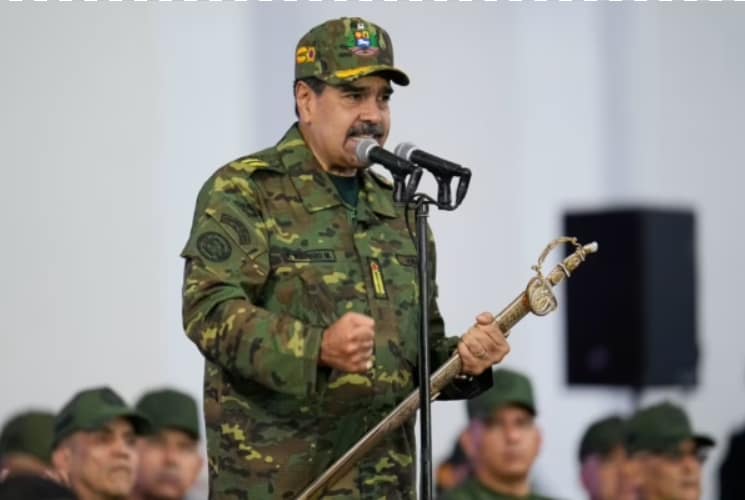
When a U.S. president can openly say his country will “run” another nation until it produces an acceptable political outcome, the argument about sovereignty is finished. Not debated. Finished.
That statement doesn’t just strip Venezuela of autonomy — it exposes how fragile sovereignty already is for small states, especially in the Caribbean.
We know this fragility intimately.
We feel it when we are pressured over who can staff our hospitals. Cuban doctors are not an ideological symbol in the Caribbean; they are care. They have filled a gap in our system that has saved many lives and brought knowledge that has improved our archaic medical infrastructure. Yet we have been told, directly and indirectly, to disengage from them — not because our people are better off without them, but because geopolitics demands compliance. When external powers can decide what healthcare partnerships are acceptable, sovereignty is already compromised.
We feel it in money. Aid, grants, security assistance, and “technical support” arrive with expectations that are never written but always understood. Step too far out of line and funding slows, projects stall, relationships cool. No threats are needed. The dependency does the work.

We feel it in global forums. Caribbean states speak, vote, attend — and then watch decisions get made elsewhere. Our influence is marginal. We are not shapers of international outcomes; we are recipients of them. Mostly, we are spectators pretending participation equals power.
And we feel it most clearly at borders.
The United States itself operates one of the world’s most powerful citizenship-adjacent investment schemes: the EB-5 Immigrant Investor Program. Through EB-5, wealthy foreign nationals purchase permanent residency — and eventually U.S. citizenship — by investing large sums of money and creating jobs. This is not theoretical. It is codified in law, openly marketed, and aggressively defended as an economic development tool. The difference is not substance but branding. When the U.S. sells access, it is called “investment-led immigration.” When small Caribbean states do it, it becomes a “security threat.”
The hypocrisy is structural. An EB-5 investor gains access to the same global mobility, financial systems, and political protections that Caribbean CIP holders are accused of exploiting — except the U.S. faces no visa retaliation, no blacklists, no moral lectures. Power shields the practice. Caribbean programmes are pressured not because they are uniquely dangerous, but because they allow small states to convert sovereignty into leverage. And leverage, when held by the weak, makes the powerful uncomfortable. That is the real issue. Not passports — but who is allowed to profit from sovereignty without permission.
Visa restrictions and travel rules are not administrative details. They are tools of discipline. Citizenship by Investment programmes have come under sustained pressure not because they are uniquely reckless, but because they represent economic autonomy. When leverage is applied, it is framed as “security.” The message is simple: align your policies or absorb the consequences.
This is the reality behind the talk of partnership.
So when Venezuela’s sovereignty is overridden openly — not even disguised as assistance, but described as administration — Caribbean leaders should not be surprised. They should recognize the logic immediately. Small states are not invaded first. They are conditioned. Managed. Warned.
And before anyone claims moral high ground, the Caribbean should also confront its own failure.
We failed Haiti.
As a region, we watched state collapse unfold next door and responded with sympathy instead of strategy, statements instead of solutions. We outsourced responsibility to international actors and then acted shocked when those interventions deepened the crisis. Haiti is the clearest warning of what happens when sovereignty erodes gradually and nobody intervenes early or collectively.
Venezuela is not Haiti — but the lesson is the same.
Defending sovereignty is not about endorsing governments. It is about defending the right of people to resolve their own political futures without trusteeship imposed from outside. Once that right is lost, reform becomes irrelevant. Power decides outcomes.
There is also a political reality that should not be ignored: war has always been a reliable distraction. When leaders face mounting domestic scrutiny, foreign crises have a habit of accelerating. The Epstein files — and the unresolved questions around power, protection, and elite accountability — sit uncomfortably close to the current moment. History shows that external conflict can reset news cycles, polarize public attention, and reframe leadership as decisive rather than defensive. Whether intentional or opportunistic, the effect is the same: uncomfortable questions fade while flags are waved. Caribbean governments would be naïve to assume timing is irrelevant. Distraction, like sovereignty, is a tool of power — and it is rarely deployed by accident..
So let’s be clear.
If we cannot say no to medical partnerships, no to economic pressure, no to visa leverage, and no to selective enforcement of international norms, then sovereignty is not something we possess. It is something we are temporarily allowed.
Flags don’t defend that. Neutral statements don’t either.
Only leverage does — economic resilience, regional unity, and the willingness to defend principles even when the beneficiary is inconvenient.
Because sovereignty that cannot be defended is not sovereignty.
It is permission.
And permission, as history keeps reminding small states, can be withdrawn without notice.
Advertise with the mоѕt vіѕіtеd nеwѕ ѕіtе іn Antigua!
We offer fully customizable and flexible digital marketing packages.
Contact us at [email protected]




Great article, Brent!
I support.
Yep this is 100% correct! Like when Maduro was saying in Venezuela that 70% of Guyana belongs to Venezuela due to the sudden oil wealth and was ready to invade and annex it?
Caricom with its so called sovereignty was ahem, ah, etc. etc. and other BS because their sovereignty was linked to crumbs thrown at them by Maduro. To hell with Guyana.
It’s only when Maduro realized that the US was waiting for that excuse to “protect its Oil Companies Investments ” that Maduro temporarily backed down and so called sovereign Caricom saved face.
Abd all of the so called pundits who bash the US and praise China, Venezuela, Cuba, Russia etc where freedom of speech or anything else is but a myth are suddenly quiet.
Because they all have relatives who have made the US their home and they don’t want to jeopardize their status. They also know if in the unlikely event that one of their relatives had chosen one those supposedly “wonderful ” countries as home, it would be way more than their status at risk.
Sovereignty is just BS.
I agree with you BS.
Correct!! We really can’t talk about sovereignty when we can’t take the bold step to become self reliant. Once we continue to hang on to the coat tail of America real sovereignty will remain a dream. We can start with small steps, cut back our over reliance on tourism, establish a regional currency not a currency that is tied to the USD, establish an immigration system based on reciprocity. Our education system should be aimed at training the youth to remain and work in the region…..in other words huge sacrifices has to be made and are we ready to make them. Time will tell
@ point.
If it’s not the US, it will be China or Russia.
What you are forgetting is that we are fallible men, and are very prone to deception and corruption. What you should be hoping for, is that we get uncorruptible leaders to lead us, because what you are hoping for, is virtually impossible.
The numbers simply don’t back it sir..it’s a math equation, and the math is not on our side.
It’s the same way the American wealth will never be transfered to black people, even though we preach black power over and over again, why, because the numbers are not with us. It’s not because black people are not capable, it’s because we simply do have the numbers on our side in the Caribbean and the US, it’s that simple.
So, we can be content with what we have, or we continue to dream bigger and bigger, but pick your option.
I agree with this article often time sovereignty for smaller countries is having policies that don’t upset bigger countries and I’m not talking about actions that directly affect a nation like invading it for resources or EU case for CIP, but situations where you’re not allowed to do business with X country or you will country will be cut of from X resource that we know you really need to run your country, Or don’t touch this business and we will continue trade with you.
I believe small states like the Caribbean is easy to pick apart when split like this its easier to have collective bargaining and harder to bully since the basic things are covered like oil and food and not a union that can be slit from the head of states like west indies federation but referendum.
BS I don’t really get what you was saying with the pundit part and also from what I remember Caricom statements to Venezuela threat to invade Guyana wasn’t that much different from the treat to invade Venezuela with peace and having conversation with the leaders. I don’t believe it’s BS because its the right to self governance.
Comments are closed.