









CLICK HERE TO JOIN OUR WHAT’S APP GROUP

Budget 2026 Series: The Fight of Our Generation
Antigua and Barbuda’s ancestors and nation builders defeated slavery, colonialism and poverty. This generation must defeat vulnerability together.

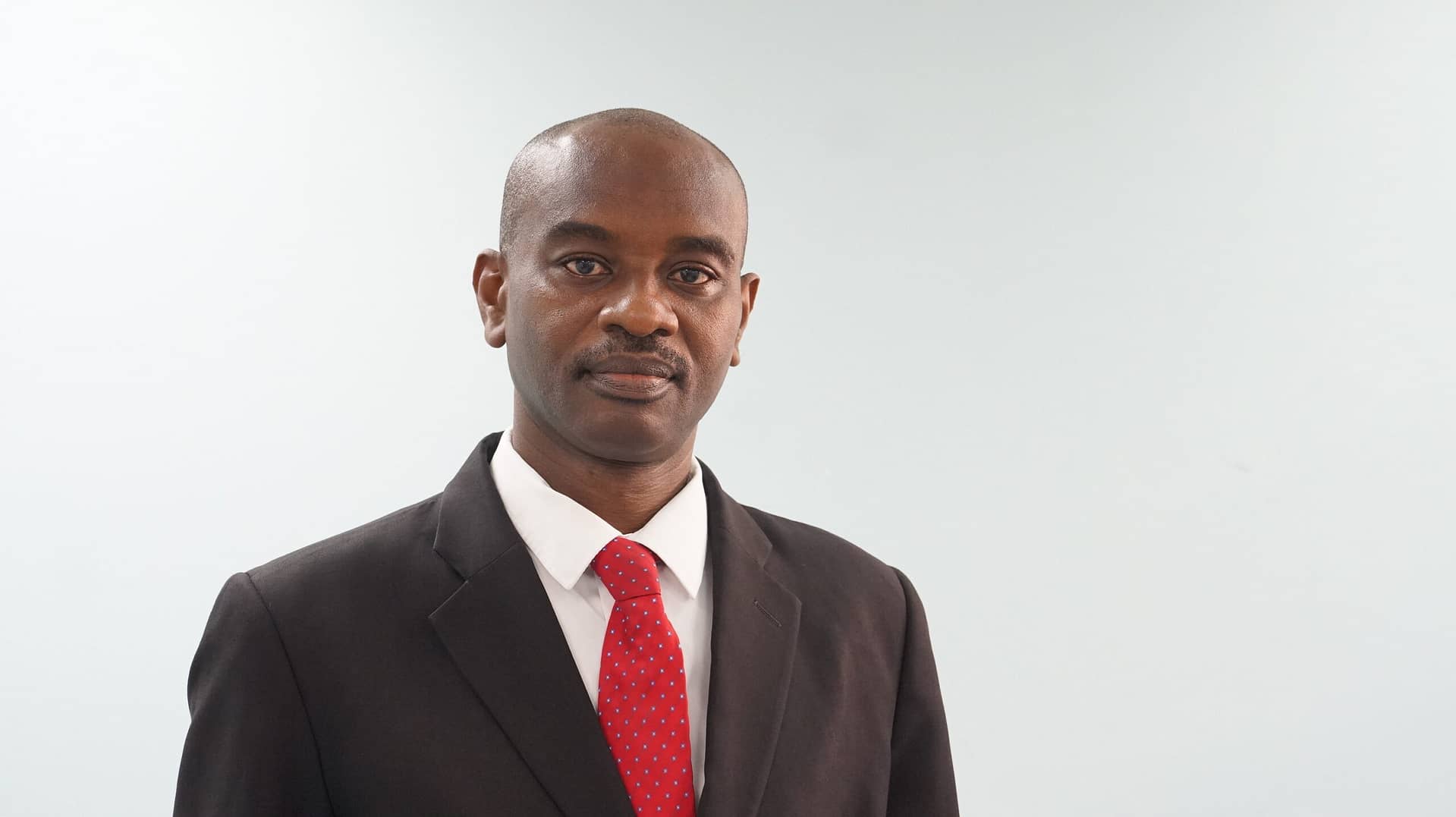
By Professor C. Justin Robinson
Pro Vice-Chancellor and Principal, The UWI Five Islands Campus

Every generation of Antiguans and Barbudans has faced a defining challenge.
For those who came before, it was the fight against slavery, the long march to self-determination and independence in 1981.

They fought for freedom of body, governance, destiny and achieved a high standard of living.
This generation’s challenge differs in form but not consequence: building a nation resilient enough to thrive when the world seems determined to test small island states to their limits. Climate shocks intensify.

Economic winds shift without warning.
External powers pressure the very programmes that fund our development.
The question is no longer whether the country is free or well off, but whether it is strong enough and united enough to remain so.
When Prime Minister Gaston Browne delivers the 2026 budget on December 4th , I am hoping policies around resilience form a central theme and organizing principle of national policy.
Not resilience as buzzword, but as concrete commitment, economic, climatic, institutional.
And not resilience as individual self-preservation, but as collective endeavour. In a nation of 100,000, we succeed together or fail together.
The tide that lifts one boat must lift all boats, or eventually it swamps them all.
More than this, the budget speech should seek to articulate a national development project, one that gives Antiguans and Barbudans something to believe in beyond their own material wellbeing—a shared vision of what this nation is building and why it matters.
The foundation is stronger than many recognize. Public debt stood at a crushing 131% of GDP in 2004; today it is 67% a twenty-year journey from fiscal crisis to stability that ranks among the Caribbean’s quiet success stories.
Growth has matched this trajectory: positive GDP in nine of ten pre-pandemic years, including rates above 5% in 2015, 2017, and 2018. The pandemic delivered a brutal 19% contraction in 2020, but recovery has been remarkable, 8.2% growth in 2021, 9.5% in 2022, 8.1% in 2023, 4.3% in 2024.
Real output now exceeds pre-pandemic levels, with a primary surplus of 3.5% of GDP. In a region where fiscal discipline remains elusive, this nation stands near the top of its class.
That is no accident. But fiscal strength is a platform, not a destination and resilience must become a central focus.
The Citizenship by Investment Programme warrants particular attention. Contributing over 70% of non-tax revenue, it represents a valuable source of foreign exchange that places no burden on resident Antiguans and Barbudans—no additional taxes drawn from local pockets, no strain on domestic resources.
In June, a leaked U.S. State Department memo identified Antigua and Barbuda among nations facing possible visa restrictions over ‘golden passport’ concerns.
The European Union has tightened its stance in parallel.
These external pressures do not diminish the programme’s value; rather, they underscore the wisdom of strengthening our fiscal foundations through enhanced tax compliance on existing taxes and broadening the domestic tax base.
A resilient nation does not abandon what works; it builds insurance against uncertainty by ensuring multiple revenue pillars stand ready should any single one face headwinds.
Tourism and hospitality, at 60% of GDP, is the bedrock of this economy and will likely remain so. The 2024 season was stellar, with record arrivals and over $1 billion in planned investment.
The challenge is not to replace this foundation but to build upon it: growing complementary sectors and fully exploiting the linkages that maximize tourism’s yield across the wider economy—agriculture supplying hotels, creative industries enriching visitor experiences, services expanding to meet new demands.
Yet climate risk remains ever-present.
Hurricane Irma’s 2017 devastation of Barbuda, nearly every structure destroyed, the population evacuated, remains seared in memory.
And just last month, Hurricane Melissa, a Category 5 monster, tore through Jamaica with 185 mph winds, killing over 100 and causing $10 billion in damage.
Climate scientists confirmed what we already knew: human-driven warming is making these storms more destructive.
Antigua was spared Melissa’s direct path, but our government moved swiftly to shelter Antiguan and Barbudan students in Kingston.
We are one Caribbean family; their vulnerability is ours. The storms will keep coming. Our infrastructure must be ready.
The timing is providential.
In November 2026, King Charles III, 56 heads of government, and 6,000 delegates will descend on St. John’s for the Commonwealth Heads of Government Meeting, Antigua and Barbuda’s largest international gathering ever.
The theme, ‘Accelerating Partnerships and Investment for a Prosperous Commonwealth,’ places resilience at its heart.
What would a true resilience budget contain? Contingency planning for CIP volatility, yes, but equally important: enhanced compliance mechanisms and a broadened tax base as fiscal insurance.
Climate adaptation that moves from rhetoric to reinforced infrastructure. Investment in human capital, the $80 million UWI Five Islands Campus expansion points the way. Deepened linkages between tourism and other sectors to multiply domestic benefits.
And a commitment that macroeconomic gains translate into shared prosperity; with inflation at 6% and prices up 23% over five years, citizens must feel the resilience we build.
Here national purpose must transcend individual ambition.
The measure of success cannot be the size of the largest fortunes but the security of the smallest households—a nation where the prosperous look out for the vulnerable, where ‘Each Endeavouring, All Achieving’ becomes lived reality.
Our ancestors understood this: the village raised the child; the community rebuilt after the storm; the strong carried the weak. For a small island state facing large challenges, that ethic is not sentimentality.
It is survival strategy.
A national development project worthy of the name must speak to this deeper aspiration: not merely what citizens will have, but who they will become together.
The forebears who broke slavery’s chains did not act expecting gratitude.
They acted because freedom was non-negotiable.
The generation that secured independence did not wait for permission.
The current generation should honour their legacy through action equal to our own moment. Building a resilient Antigua and Barbuda together, for each other is this generation’s sacred task.
The ancestors fought so the country could be free.
Now the current generation must build so those who follow remain so: strong enough to weather any storm, united enough to ensure no one is left behind.
Budgets are moral documents.
On December 4th , Antigua and Barbuda can show the world and itself what building resilience and solidarity truly means.
Prof. C. Justin Robinson, a Vincentian and UWI graduate, holds a BSc in Management Studies, MSc in Finance and Econometrics, and PhD in Finance.
With over 25 years at UWI, he has served in various leadership roles, including Dean and Pro Vice Chancellor, Board for Undergraduate Studies.
A Professor of Corporate Finance with extensive research publications, he is actively involved in regional financial institutions and is currently the Principal of The UWI Five Islands Campus in Antigua and Barbuda
CLICK HERE TO JOIN OUR WHAT’S APP GROUP
CLICK HERE TO JOIN OUR WHAT’S APP GROUP
CLICK HERE TO JOIN OUR WHAT’S APP GROUP
CLICK HERE TO JOIN OUR WHAT’S APP GROUP
CLICK HERE TO JOIN OUR WHAT’S APP GROUP
CLICK HERE TO JOIN OUR WHAT’S APP GROUP
CLICK HERE TO JOIN OUR WHAT’S APP GROUP
CLICK HERE TO JOIN OUR WHAT’S APP GROUP
CLICK HERE TO JOIN OUR WHAT’S APP GROUP
CLICK HERE TO JOIN OUR WHAT’S APP GROUP
CLICK HERE TO JOIN OUR WHAT’S APP GROUP
CLICK HERE TO JOIN OUR WHAT’S APP GROUP
CLICK HERE TO JOIN OUR WHAT’S APP GROUP
Advertise with the mоѕt vіѕіtеd nеwѕ ѕіtе іn Antigua!
We offer fully customizable and flexible digital marketing packages.
Contact us at [email protected]




Does Justin Robinson have some supper that he must sing for?
Of course he does. The professor test positive for stupid by making himself a shrill for Gaston Browne.
He doesn’t have shit to say about the many things that plague this Country other than to kiss Gaston’s derrière.
There are hundreds of subjects The Professor can write about that’s more appropriate for an academic leader, in addressing the issues of the day both locally and regionally.
The Professor should recognize that this is a sickening moral slum, in which he is an accomplice.
The displaced concept of academia’s role continues. It is among the reasons why the Caribbean Community progress is so slow.
Rather acting as Gaston Browns advance man; The Professor needs to stop making rhetorical statements about such things like Ai to advance himself and the political agenda of Gaston.
He should focus on developing a cadre of students who can pursue careers in machine learning and LLM.
He should create the environment for students to innovate with products that has broad appeal in local and regional markets.
@Concerbed Citizen
Professor Justin Robinson writes “budget are moral documents” he is right about that.
He is sucking up so much, that he refuses to recognize that in Antigua and Barbuda the budget is an as unethical, callous, or unscrupulous presentation.
Commenting on a budget shoukd be based on data.
Not jargon’s and rhetorical flourishes thst are presented with no context or substance whatsoever to describe the actual economic conditions of the poorer sector of the population.
The Professor is obviously singing for his supper and the continued support of Gaston Brown.
Comments are closed.