






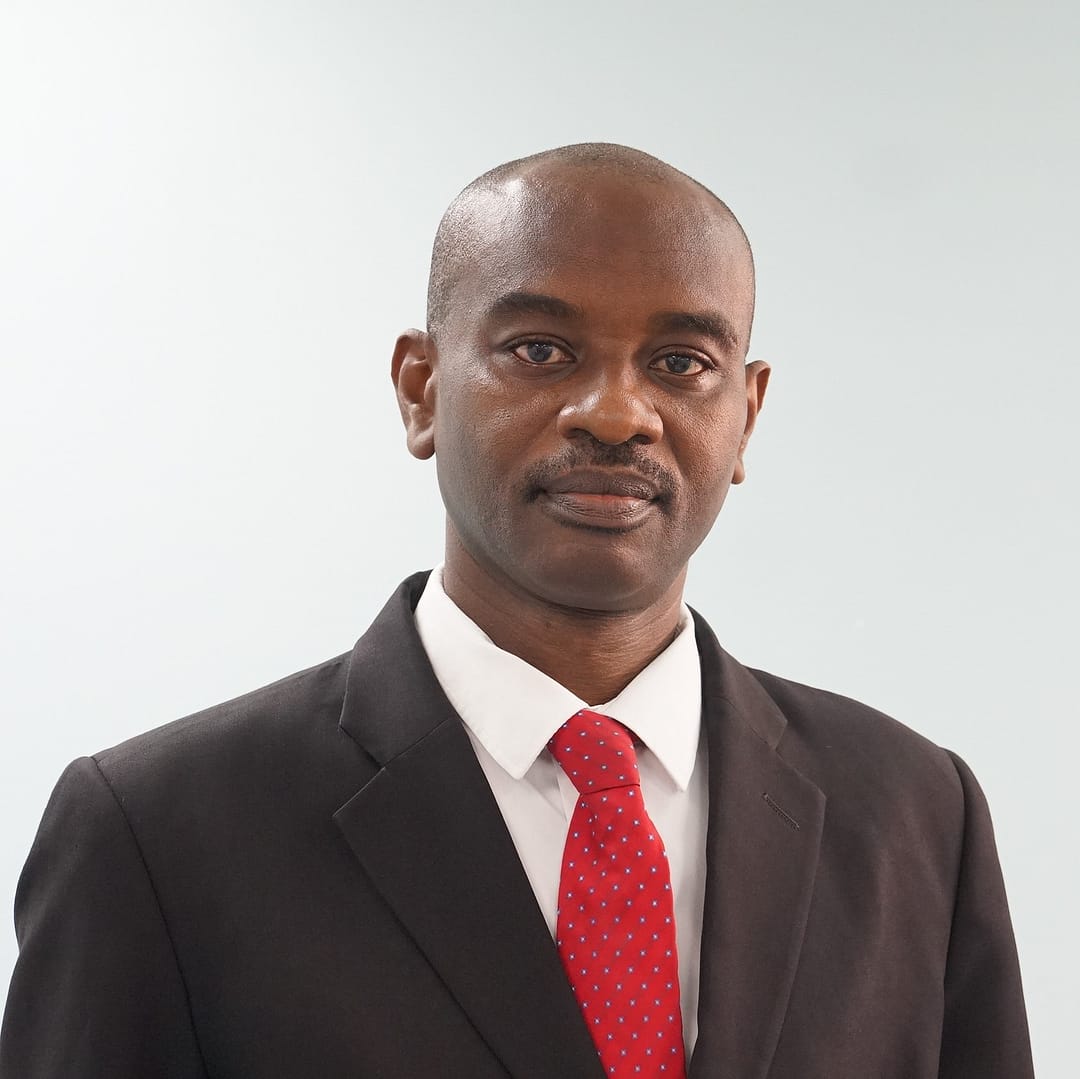



By Professor C. Justin Robinson
Pro Vice-Chancellor and Principal, The UWI Five Islands Campus
On the evening of Tuesday, December 16th , citizens of Antigua & Barbuda and Dominica received unwelcome news.
The Trump administration had announced an expanded travel ban, and among the countries added were Antigua and Barbuda and Dominica.
For most of us, this is not an abstraction, this is the aunt in Brooklyn we visit every summer, the cousin’s wedding in Miami next spring, the graduate programme, the job interview, the family reunions that stitch Caribbean life to American life.
For thirty years, that connection required no particular political consciousness to maintain. You got your visa, you boarded your flight, you moved between worlds.
The US was not a foreign policy challenge, it was simply where family lived, where the culture that shaped your music and dreams originated.

And now, suddenly, it is complicated and many Caribbean people have no framework for understanding why.
I have been thinking about this since a conversation with one of my graduate students several weeks ago.
We had been discussing the American military buildup in the Caribbean, the USS Gerald R. Ford stationed off Venezuela’s coast, over fifteen thousand US personnel deployed, more than eighty people killed in strikes on boats the Americans claim carried drugs.
She asked what seemed to be a most naïve question, “But what has Venezuela done to the United States?” Her confusion is itself the story of a generation raised in peace and deeply embedded in American culture.
For those of us who came of age during the Cold War, military buildups required no explanation rooted in bilateral grievance. Great powers project force because geography is destiny and spheres of influence must be maintained.
Grenada “did” nothing to the United States in 1983. Yet American paratroopers still landed at Point Salines. But my student, like most of her generation across CARICOM, has no living memory of that world.
She was born into a Caribbean that had become, almost without anyone noticing, a Zone of Peace, not as diplomatic aspiration but as lived reality. For thirty years, the great powers largely left us alone.
The United States remained the fabric of Caribbean life due to family, remittances and culture, but not as a military presence. The limited Russian presence retreated and China arrived with infrastructure loans, not warships.
This generation lacks a framework their grandparents possessed for understanding why superpowers behave as they do.
There is something else that Washington and other great powers consistently fail to grasp, the Caribbean’s instinctive, bone-deep anti-militarism. This is not ideological pacifism; it is simply that war is not part of our lived reality.
CARICOM nations do not have viable armies, our Defence Forces are tiny, Antigua’s could fit in a small auditorium.
For Caribbean people, war is something that happens far away, in failed states, where politics has catastrophically broken down.
It is not something we do and the very idea of military conflict as a tool of policy feels alien. When American officials speak of “military options” and “all tools on the table,” when aircraft carriers appear on our horizon, they may not realize how foreign this sounds to Caribbean ears. We are non-military because that is who we are as surely as cricket and carnival.
This context is essential for understanding the impossible choices now facing Caribbean leaders, choices that may look like indecision, weakness or even stubbornness to outside observers but are in fact the careful calculations that small-state survival demands.
Consider the dilemmas, When Trinidad’s Prime Minister offered American forces access to her territory, Venezuela’s President Maduro declared it tantamount to an act of war.
When Antigua declined a US request to host a military radar installation, we now find ourselves on a travel ban list, while Grenada still considering a similar request, does not.
Cooperate with the Americans and face Venezuelan threats, decline and risk American displeasure. Accept Chinese infrastructure investment and attract Washington’s suspicion, reject it and lose development funding your people desperately need.
There is no “right answer” here and there is no simple path that avoids all costs. Every choice carries consequences, and the consequences fall not on distant diplomats but on ordinary citizens, on visa applications, on trade relationships, on the cost of goods, on opportunities opened or foreclosed.
This is why Caribbean citizens must understand what their leaders are actually navigating.
It is easy to demand clarity, pick a side, state your position, stand firm, but small states do not have the luxury of grand gestures.
Our leverage is limited, our economies are vulnerable, our populations can fit inside a single American city.
What looks like ambiguity is often wisdom, what looks like hesitation is often the careful maintenance of relationships that cannot be easily rebuilt once broken.
And the crisis is real.
The United States has assembled its largest military deployment in the Western Hemisphere since the Cuban Missile Crisis. A blockade of Venezuelan oil exports has been ordered.
Venezuela has turned to China, Russia, and Iran for support. The Caribbean finds itself where it has always preferred not to be, between great powers in collision.
CARICOM’s response has been one of improvisation, not coordination, each nation calculating its interests in real-time.
The region needs to refocus and rapidly pivot to the reality of a global shift that demands nimble, sophisticated diplomacy of a kind we have not needed for a generation.
My generation understood this. We watched careers disrupted and families divided by Cold War politics. We knew that maintaining relationships with powerful nations requires constant attention, diplomatic skill, and sometimes difficult trade-offs.
These were not reasons for resentment but simply realities of a world where power is distributed unequally and geography matters.
The Caribbean’s Zone of Peace was never guaranteed. It was a gift of historical circumstance, a generation-long pause.
That pause is ending and what replaces it will be determined by skill, the political and diplomatic skill that small states must deploy to survive between giants.
I call these skills Caribbean dance moves, the ability to maintain balance while the floor shifts, to move gracefully between partners without losing your footing, to keep relationships intact when the music changes tempo.
These are not skills of resistance or antagonism; they are skills of survival and dignity.
They require understanding the tensions between maintaining deep bonds with the United States, bonds driven by geography, bonds of family, culture, and shared values, while also maintaining the sovereign right to chart our own course. Powerful nations will act in their interests.
Our task is not to resent this but to navigate it wisely, preserving what matters most, our relationships, our economies, and our room to manoeuvre.
A generation raised in peace, embedded in American life and instinctively suspicious of military logic learn very quickly the grammar of a world they did not choose but must now navigate.
The music has started again! My student asked a simple question. The answer, it turns out, is anything but simple. And that is the lesson her generation, all of us must now absorb.
Advertise with the mоѕt vіѕіtеd nеwѕ ѕіtе іn Antigua!
We offer fully customizable and flexible digital marketing packages.
Contact us at [email protected]



Good perspective as usual Professor. You know the singling out of Antigua and Barbuda and Dominica though intentional was done only to send a message to the wider OECS and Caribbean. Once we have the Citizenship by Investment Program and the Cuban Medical Brigade, we would always be in contention, controversy and argument with the US as they want us to abandon both schemes completely. The warning shot that was sent to Antigua and Barbuda and Dominica is their admonition to the entire region to fall in line or else. . In addition to that, Antigua and Barbuda and Dominica’s Prime Minister were about the two most vocal, operatic and outspoken voices in relation to the ongoing military issues against Venezuela. If this was not a “hush” or else, I don’t know what is.
Totally agree!!!
It’s just another ploy to take away the independence of the region.
First offshore banking
Second gaming
Take everything away and leave us dependent, but God does not sleep, Trump will not last forever, AND THE WORLD WILL NEVER FORGET NOR FORGIVE AMERICA FOR PUTTING HIM THERE!
But, for whose blessings we bear: And for whose laws we abide: when caught between a rock and a hard place; by the inevitable consequences of our geographical local, and the geopolitical persuasion, as dictated by the reality of the have, against the have-nots syndrome. For far too long we linger and suffer in the abyss; as the bastard’s children of European’s clutches; like barnacles clinging on rocks, and waiting on the rising tide of European’s hegemony, to be fed: even when the reality of our umbilical cord have be severed; and we were set adrift “abandoned” like dingies cut from the mother ship; to be marooned like passive sedentary sentinels on these foreign Caribbean shores; when our usefulness had been spent! after their physical exploitation and, tormenting of our lot: while we awited for rescue from beyond the horizon afar, that never came, and no one heard our cry or plea, or, saw the smoke signal of our plight. Then came the advent of the new dawning, and consciousness of new horizons of venture: as at first, the Russian in Cuba; then China awakened from its embryonic slumbering state to confront, and challenge European’s dominance. (Please note that the USA: in my continence are akin to Europeans: in my consciousness of reference) and we are now again, cought and trapped between the rock and the hard place: hoping to be recognized from whom we are. A zone of peace, enemies of none, and friends to all; fearing the devil we know, and the devil unknown. Must our quasi sovereignty be dammed to the convenient appeasement of a comfort zone for hegemonic Capitalistic imperialism and Communism expansion. We! who have no desire or defense against the prevailing tide of worldly dominance; must suffer the wrath of the might and mightier: with the suffering surrender of sovereign dignity without challenge; for our wants and need, and, without survival dictate, and concur? I beg to differ, and oppose all hegemonic persuasion.
I have read your articles before, loved them, this is the first time I found some bias and ignorance in one. This did not start or have to do, in any substantial way, with declining to allow a radar. Please do not spread wrong information. Please keep your credibility with me and do not say ignorance.
@Handit2me December 19, 2025 At 6:39 pm
Usually, I do not respond to someone’s comments anymore. Everyone is entitled to their own opinion. But I just want to give you thumbs up for your comments.
Nevertheless, I will keep repeating Henry Kissinger’s when he said, “It may be dangerous to be America’s enemy, but to be America’s friend is fatal.”
Since the end of the cold war, America became the only ‘Superpower’ left. It suddenly changed its attitude and threw out the diplomacy it was known for. Even friends did not recognize them anymore. As the saying goes ” “Power tends to corrupt, and absolute power corrupts absolutely,”. That is exactly where we are today. America is CORRUPT. All because of the Absolute Power they have. And Donald Trump reminds us of every change that he has that the US Military is the strongest military in the world today. At least that is what they want us to believe. I say this because reality is that they have not won any war lately. Iraq, they retreated after many years trying to win from ISIS. In Afghanistan they retreated after years trying to win from the Taliban. They lost the war in Vietnam against the Viet Cong. The war against the Viet Cong (1954–1975) was a protracted, costly Cold War conflict in which US and South Vietnamese forces fought against South Vietnamese communist guerrillas supported by North Vietnam, China, and the USSR. Utilizing guerrilla tactics, tunnels, and traps, the Viet Cong engaged in a war of attrition, resulting in a non-victorious outcome for the US and eventual unification under communist control in 1975.
The Korean War started on 25 June 1950 and ended on 27 July 1953, after the signing of an armistice agreeing that the country would remain divided.
The three-year war, often referred to as the ‘Forgotten War’, was exceptionally bloody and led to the deaths of 3 million people and tens of thousands of casualties.
North Korea soon fell under the influence of the Soviet Union, whilst the south relied on the support of the Americans. The Korean People’s Army (KPA) was established in North Korea in February 1948, from Korean communist guerrillas who had previously served with the Chinese People’s Liberation Army but were ‘advised’ by Soviet personnel. By mid-1950 the KPA was made up of ten infantry divisions plus other units totaling some 223,000 men.
The United States made several historic deals with Soviet leader Mikhail Gorbachev in the late 1980s and early 1990s, primarily focused on massive nuclear arms reductions, ending the Cold War, and navigating German reunification. Key agreements included the 1987 INF Treaty eliminating intermediate-range missiles and the 1991 START treaty. They also agreed that NATO will not be expanding to the Russian border.
We now live in the period of that broken promise. NATO did expand toward the Russian border, including several former Soviet Republics in their membership. The Baltic States: Estonia, Latvia and Lithuania became full members of NATO. And we know what happened later when Polen also joined.
And what do we see now, NATO is moving even closer right on the Russian border by encouraging Ukraine to join them as well.
Well, everyone knows about the Cuban Missile Crises. The US could not sit back and allow this thread right on their back door. And now they see the same thing happening in Venezuela. And to top it all Venezuela sits on the world largest oil fields. And we know how powerful it is to control oil. When it comes to minerals, Venezuela can be regarded as the richest country on earth. But of course, that is just on paper. They are broke. Broke because of the sanctions placed on them by the USA. Broke because the previous leaders used to plunder the assets of the country with the help of the USA power rich EXXON Clan. America is the only country on earth that goes to war to protect the interest of their rich people. That is why you cannot confiscate any properties from a US Citizen and get away with it. That is why they will never give up on the sanctions against Cuba. And now Trump himself revealed that all this with Venezuela is about the oil rights that were taken away by Chavez and continued under Maduro. The USA will go to war to have their rich friends retain their wealth.
Antigua and Barbuda and the rest of the Caribbean and the rest of the world for that matter will learn that it is dangerous to be America’s enemy, but to be America’s friend is fatal.
Small states are always punished for not choosing sides. This article explains that reality well.
Excellent reminder that what sounds strategic in Washington sounds frightening in the Caribbean
CARICOM can’t afford to pick sides, but neutrality gets harder every year.
WHAT THE HELL…! …GRENADA DID ‘…NOTHING’ TO THE UNITED STATES:
WHERE THE HELL WAS THIS PROFESSOR? …@JERRY ANN- ABSOLUTELY CORRECT
***
INVITED AND INCURRED US WRATH
Sure, this ‘…PROFESSOR,’ has made some good observations.
He also provides some reasons why the nation seemed to have:
(a) ‘…INVITED: and
(b) …INCURRED THE WRATH OF THE UNITED STATES.’
***
SMALL PORTION:
JUST A SMALL PORTION OF THE WRATH OF THE UNITED STATES.’
***
GRENADA INVASION:
When the ‘…PROFESSOR’ referenced THE ‘…GRENADA INVASION,’ he may have disingenuously omitted to refer to:
(i) ‘…THE ‘…KEY FACTORS,’ RESULTING IN THE MILITARY INTERVENTION:
(ii) …THE CARICOM NATIONS THAT SUPPORTED THE UNITED STATES: and
(ii) …UNITED STATES AND CARICOM COMMANDERS INVOLVED.’
***
TRUTH NOT DIVISIBLE:
THE ‘…TRUTH IUS NEVER ‘…DIVISIBLE.’
***
ALL ARE ‘…LISTED AT ‘…WIKIPEDIA.’
***
GIVE THE HISTORY AS IT IS WRITTEN, ‘…PROFESSOR.’
***
@JERRY ANN
ABSOLUTELY CORRECT.
ONE IS EITHER:
(a) ‘…A FRIEND: or
(b) …A FOE: OR
(c) …AN ENEMY.’
***
FRIENDS ARE ‘…RARELY’ PUNISHED.’
***
WRITE GOOD, PROFESSOR. ‘…CHOICE AND CONSEQUENCES’ [Paragraph 23].
***
Yes great read, but what this professor failed to point out, is that in all this political atmosphere, one has to pick a said, and GB actually picked a side, he picked Venezuela, and that was the wrong side from a diplomatic stand point. That’s his failure here, of which I’ve warned him over and over again on this forum.
You see, professor, some of us live in a real world, in a world where we see everything right in front of us..not in the pass, but in the very things that are pertinent in today’s world, and GB failed to see this coming. That’s his failure!!!
And, even though he may come across as not picking a side with his statements of ” we are friends to all and enemy to none”, he actually did picked a side, and it was the wrong side.. that’s the reality here.
That’s what we are living in, not some history story about what the carribean once was.
We are no more that carribean. Jamaica has one of the highest murder rates in the world, so does Hati, the DR, and a few others. Antigua has seen a terrible spike in crimes across the board, and one cannot sit there and deny that Antigua’s immigration system has nothing to do with it, including the CIP.
Yes America has largely ignored us for years, but given the political climate as we stand ” today” the US made a calculated decision which Antigua could have avoided.
Speak of reality sir..do that please, because many of us live in that, and it might do your students well to understand the world we really live in if you are being realistic to them.
But good luck to your students. I wish them well, but it also starts with you.
It’s one thing to have an opinion, but the best decision are routed in reality. Teach your students to live in that, and try not to be disingenuous about the facts to them.
” Real people” get real results, not those who are delusional. This administration has been delusional in their thinking that they can just straddle the fence when it comes to the current administration in the white house right now, well now they know.
GB and co were supposed to figure it out, and their naivety cost them, and ultimately innocent Antiguan’s.
Comments are closed.