





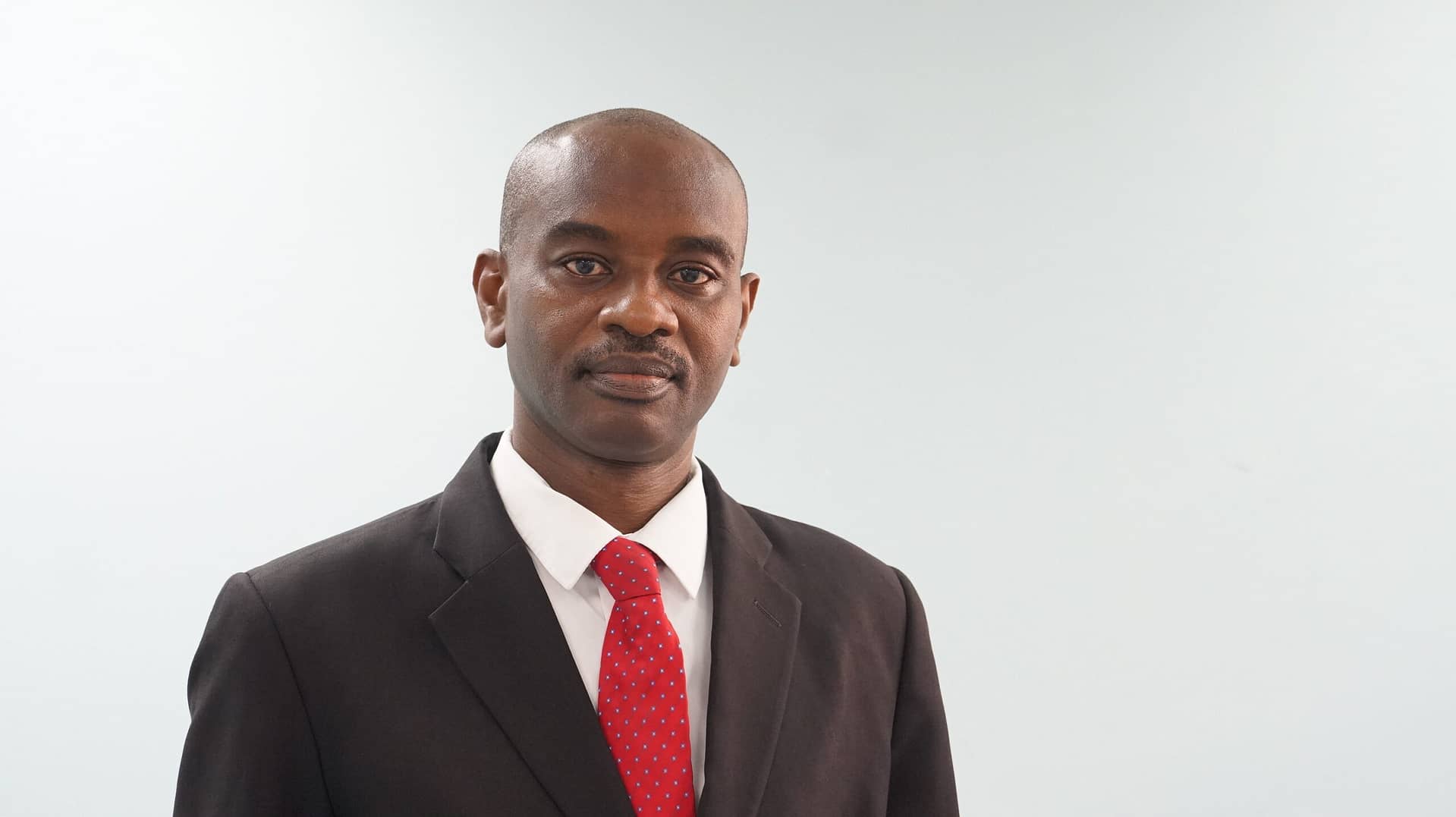



By Professor C. Justin Robinson
Pro Vice-Chancellor and Principal, The UWI Five Islands Campus
The international order that has structured global affairs since 1945 is being dismantled. For the Caribbean and CARICOM, this represents an existential threat to the very possibility of meaningful sovereignty and as a people we must be clear-eyed about what is occurring. The United States, the principal architect of the post-war multilateral system is not merely withdrawing from international commitments it is actively punishing states that exercise independent judgment, shrinking the policy space available to smaller nations, and asserting that military and economic might, not treaties or institutions, determine outcomes. I am of the view that this stance is not a temporary aberration but reflects deep currents in American political life that will likely outlast any single administration. For nations ninety miles to nine hundred miles from American shores, the implications could not be more serious.
The Order That Made Us Possible
The post-war system was never perfect, its ideals frequently betrayed, its institutions often captured by great power interests. However, it established frameworks within which small nations could exist with dignity. The UN Charter’s principle of sovereign equality, the legal fiction that Antigua and Barbuda, Brazil, Barbados, China, Grenada, St. Vincent and the Grenadines and the United States are in some formal sense peers, gave diplomatic voice to nations that could never command attention through force.
The International Court of Justice offered recourse for disputes that would otherwise be settled by power alone. Climate frameworks created arenas where vulnerable island states could demand recognition. CARICOM itself is a creature of this era. We pooled sovereignty to amplify voice in forums where voice mattered. We built institutions premised on the assumption that rules would remain the grammar of international affairs. The stark reality is that these assumptions no longer hold!
Coercion, Not Competition

During the Cold War, superpower competition created space for small states to manoeuvre. Both powers courted allies, offered inducements, competed for influence. Non-alignment was possible and the Caribbean navigated between poles, extracted concessions, maintained options. The current moment is qualitatively different.
The United States is not competing for Caribbean allegiance it is demanding compliance. The question is not “how can we win your partnership or convince about our ideology ?” but “what will you suffer if you defy us?” Economic weaponization has moved from adversary relations to alliance management. Tariffs and sanctions threaten partners who diverge from American preferences. For CARICOM economies dependent on US trade, tourism, remittances, and financial system access, punitive measures could prove devastating within months. The threat need not be executed its credibility alone constrains choice. The cumulative effect is the shrinking of policy space. What trade relationships can we pursue? What diplomatic positions can we take? Each decision now carries the shadow of punishment.
More Dangerous Than the Cold War
It may seem hyperbolic to claim the present is more dangerous than an era that brought nuclear annihilation to the brink. However, for small states, this may be a m ore dangerous world. Cold War competition gave us leverage, Soviet alternatives meant options that could extract better terms and the structure of bipolar rivalry created space for agency.
Today, no countervailing power courts us the same way. China offers investment but does not compete for ideological allegiance and does not need the Caribbean to demonstrate its model’s superiority. Meanwhile, the American posture has shifted from “choose us over them” to “choose us or face consequences.”
Moreover, Cold War competition paradoxically reinforced multilateral structures. Both superpowers used international law as an arena for legitimacy, implicitly affirming that rules mattered. Today, the rules themselves are targets. When American officials sanction ICC prosecutors, dismiss WTO rulings, and withdraw from health and human rights bodies, they deny the system’s authority. There is no framework to appeal to, no principle the hegemon acknowledges as binding on itself.
Not a Passing Storm
It would be comforting to believe this a temporary aberration, soon corrected by electoral alternation in the USA. CARICOM nations might be tempted to keep heads down until the storm passes. This could be a dangerous miscalculation as the intellectual groundwork for the American shift has been laid over decades and now represents a potent force, if not the most potent force, in American political life.
“America First” nationalism, scepticism of multilateral institutions, rejection of constraints on American sovereignty, these positions command substantial elite support across conservative think tanks, media ecosystems, and political networks. The Republican Party’s transformation is complete and crucially the Democratic alternative has itself shifted toward nationalism, even if the style differs. The coercive turn may persist regardless of which party holds power. The degree may vary but the direction is set.
The Ideological Underpinnings
I feel compelled to name what others leave implicit. The current American political formation is animated by currents of white supremacy with deep roots in American history. The hostility to multilateralism is not ideologically neutral. International institutions constrain the powerful on behalf of universal principles, and Human rights frameworks assert the dignity of all people. These premises are incompatible with a worldview that ranks civilizations, sees demographic change as threat, and understands American greatness in racial terms.
For the Caribbean, this is not abstract. We are nations built from the wreckage of slavery and colonialism, and our populations are overwhelmingly of African and South Asian descent. When American political movements invoke civilizational hierarchy, when they speak of “shithole countries,” when they target majority-Black nations for visa restrictions and deportation enforcement we know what we are hearing as we have heard it before. Our vulnerability is not incidental to this project it is in some sense, the point of the project.
The Caribbean Predicament
Geography is destiny, and ours is unforgiving. Some of our islands lie closer to Miami than Miami lies to Atlanta. American tourists fill our hotels, American dollars flow through our banks, American visas determine whether our citizens can visit family or conduct business and American deportation flights return our nationals after decades of residence. There is no aspect of Caribbean life untouched by American proximity.
CARICOM’s architecture compounds the vulnerability. Our consensus model is poorly suited for rapid response to bilateral coercion. Washington can apply pressure sequentially, extract concessions from the weakest, use those to pressure others. We can be picked off one by one.
Where do we turn? Europe is distant and distracted. China offers investment but not protection from American pressure, indeed, relationships with China increasingly trigger that pressure. The Non-Aligned Movement presupposed a competitive structure that made space for the unaligned. In a coercive unipolar moment, non-alignment may be a posture without content.
The Stakes
The post-war order did not merely permit small state sovereignty it constituted it. Caribbean nations exist as independent actors because a rules-based system gave juridical equality practical meaning, however, that framework is collapsing. This is not the Cold War, when competition created space. This is hegemony without constraint, exercised by a power from which geography offers no escape. CARICOM faces not a policy challenge but an existential reckoning. The question is whether we can survive as anything other than dependencies, whether we can remain, in any substantive sense, free.
The diagnosis is grim; however, diagnosis is not destiny. What matters now is strategic clarity about our options from compliance to defiance and the choices that will determine whether the Caribbean remains a collection of sovereign nations or becomes, once again, a sphere of influence managed by others which I will explore in part 2. The time for comfortable illusions has passed.
Advertise with the mоѕt vіѕіtеd nеwѕ ѕіtе іn Antigua!
We offer fully customizable and flexible digital marketing packages.
Contact us at [email protected]



This is a very good analysis that clarifies and explains our predicament.
This explanation is long overdue, and almost a little too late. Why those with the knowledge of, always wait till the last minute to ring the alarm, and put the public on their guard?
To the degree it’s a predicament, we have helped to make our bed.
It appears the Caribbean has just discovered the word “sovereign”. It’s being kicked about like sand on the beach in recent weeks
Caribbean institutions including the writers employer UWI has failed the Caribbean people.
This is one of many verbose examples written by Caribbean academics fill with rhetoric and gorgons masquerading as a seminal paper with little substance on the issues that the Caribbean is faced with.
CARICOM a failure which has done very little than holding ceremonial meetings.
The Treaty of Chaguaramas signed in 1973 establishing in 1973, and revised establishing CSME has not been working.
The to whom the writter as an economist would be better served analyzing why inspite of CSME we are trading primarily with the USA for food rather than ourselves.
A member of CARICOM, Guyana is the only country in the world that is food secure, yet 80% of Jamaica can only afford the back and neck portions of chickens.
Health policies in the Caribbean are failures. Healthcare services are substandard. Antigua had over 25,000 visit to its emergency department. A colossal failure in healthcare and a lack of ambulatory network.
The importation of nurses from Africa and the planning of a law school. Can there be any better evidence of upside down priorities?
UWI tells glowingly and boasts full of its FT university rating.
Yet Created in 1953 as a medical school as a part of University College London; the Caribbean community that UWI serves were dependent on
Cuban Government medical personnel services until they were forced out.
I really don’t expect much better. My judgment on the writter is based on the 2 or 3 conferences held at UWI of Ai.
Not only the institutions know nothing about the state of Ai it’s offering an Ai curriculum.
Talking about Caribbean institutions failing its people.
This is a well-reasoned essay that deserves very close attention. It should be discussed as a matter of urgency by CARICOM leaders.
Comments are closed.