









the Cuban Internationalism
by Antiguan Graduates from Cuban Universities
The internationalist spirit of the Cuban Revolution, which has become established policy, can be traced right back to the very beginning of the revolutionary process.

When Fidel Castro came to power with the triumph of the Rebel Army, on January 1st 1959, there were dire health conditions in Cuba, especially in rural areas, just as there were widespread poverty and illiteracy.
Of the few young people from poor families, who had got the opportunity to study medicine, there were those who were waiting for five or more years, to save enough money to pay for graduation. It was the revolution that allowed them to graduate free of cost.
Several doctors, who were members of elite families, left the country, rather than participate in a new, socialized healthcare system. It was therefore necessary to train as many doctors as would be needed.
But the Cuban revolutionary leadership was never just concerned about Cuba. Theirs was the cause of human dignity. The immortal Ernesto Che’ Guevara, a medical doctor from Argentina, and who gave his life in Bolivia, while fighting to liberate the people of that country, was a passionate humanist and internationalist.
Che’ gave up his position in government, and role as head of the Central Bank of Cuba, to be a guerilla fighter and doctor on the African continent, among those struggling to liberate themselves from colonialism and white supremacy. That was in the true spirit of uplifting all humanity.
Today, as part of the revolutionary commitment born of that great internationalist vision, Cuba has positioned herself in the forefront of healthcare, not only for her own citizens, but for people around the world. Thousands of young people from around the world, primarily the Third World, have been trained as medical doctors
in Cuba, and Cuban doctors can be found working around the world.
All of the above has been accomplished by the extraordinary effort and revolutionary generosity of a people blockaded economically and financially, and under constant threat and hostility. The Cuban government and people know what they have had to do and what they must do for the survival of their revolution and for its internationalist thrust. The Cuban professionals fulfill their internationalist missions with great enthusiasm and pride.
We therefore reject and soundly denounce the repeated pronouncements made by the evil and inept Trump regime, in an effort to vilify the Cuban leadership and to demean the internationalist engagements of the Cuban professionals.
At this time, when the wealthiest nation in the history of the world finds itself in a deep health crisis which it should have averted; lacking the material preparation, the organization or the social capital, to deal with COVID-19, its leaders choose to be shamelessly loud in pouring scorn on Cuba, a little blockaded and struggling island in the Caribbean, that is coming to the rescue of even countries in the developed world.
Old people in this country would say, that they are taking shame and making fight.
SHAME ON THE TRUMP REGIME!
LONG LIVE THE INTERNATIONALIST SPIRIT OF THE CUBAN REVOLUTION.
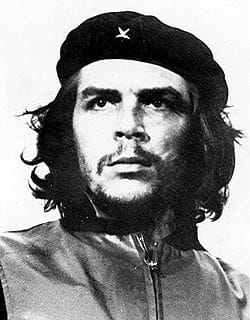
Che’ Guevara
Advertise with the mоѕt vіѕіtеd nеwѕ ѕіtе іn Antigua!
We offer fully customizable and flexible digital marketing packages.
Contact us at [email protected]




Communism is a failure everywhere is goes….Cuba is a rust bucket of it’s former self…..people are educated in Cuba but can’t make a decent income that’s why they always jump at the opportunity to migrate…Cuba is FAILING…SO YES LONG LIVE THE REVOLUTION THAT DESTROYED CUBA…
BUNCH OF BULLSHIT!!!!
All the Antiguans who got the opportunity to study in Cuba are indeed thankful but quickly discovered the rusty old conditions of Communist living….Communism and Socialism is a failure…All the communist states in Europe were relieved when Soviet Union collapsed and quickly became westernized democratic thriving countries…..
@this world is a messed up place, have you thought about the sanctions being placed on Cuba is restricting the income of the country since international trade is virtually banned with the blockage imposed on Cuba heavily restricting basic items like food, medical supplies, natural resources like oil and gas.
If socialism never work what about China you always talk about them and they make literally every we use in our daily life how did the USSR was the #2 economy in the world, and why did every country that tried to do anything close to socialism most cases voted for in a election by the people were overthrown by a coup most cases can be traced to US and France and ways followed by a dictator which killed anyone seen as communist which how we got jokes like Pinochet helicopter ride where he took people who he basically didn’t like flew them out to places like the sea or jungle and pushed them out, gun squads and more. He was the US backed dictator following Allende victory in 1970 election there are many more moments like that such as Guatemala and they coup for the banana company or the many attempts on Fidel Castro life.
If you know history you would know Cuba was doing well until the 90s when their biggest partner USSR illegally resolved but it’s not really talked about the year after that’s when the blockage started which is why Cuba is struggling. The Cuban revolution did improve life a lot it’s in this letter, it educated, provided free schooling, houses cases when rent tenants paid more or equal the house value where given ownership to the property, they also took control of their resources which saw them actually making money from their resources instead of it being held by a few or sent out of the country. Like look Cuba before the revolution and why Casto was supported by the country.
The USSR wasn’t happy when it was dissolved in the constitution each country/soviet add the option to leave at their own will but they didn’t because being in the USSR you were provided resources your country wouldn’t have like Russia would send oil to wherever if that place didn’t have it and other resources were shared. So when the referendum was published asking whether to dissolve the USSR the answer was 75% no and the countries with the highest in favour of keep the republic were smaller ones. Not the mention the period following the fall of the USSR suicide risen so much the life expectancy was halved many lost their jobs a lot of cities were abandoned because a lot of cases the USSR subsidised business that weren’t making profit to keep people from losing their jobs also women were pushed out the work place and lost all their rights they had such as one party consent divorce no questions ask and since USSR housing was so easy they lost the option of moving out from abusive situations. All of that was caused by the shock therapy caused by US advice which made everything private and sold which made the Oligarchy we have today in Russia and other former republics. Also I wouldn’t call them thriving or democratic at all. Have you seen outside the main cities of like Georgia, Lithuania and countries like that? Their economy is propped up by a small group of persons while the others try to make ends meet.
Cuba is going through the most difficult times in its history, but we can’t call it a failure just because it hasn’t been allowed to live. What would happen if an island like Cuba, or any other country, weren’t allowed to conduct transactions and banks were fined for doing so? What if purchases had to be made in third countries at higher prices? What if oil imports were blocked? What if European tourists couldn’t enter Cuba because their visas would be revoked, and Americans couldn’t enter either, given that tourism is the main engine of the economy? What if ships entering the island couldn’t enter the United States for six months? Then tell me, what economy could withstand more than 60 years under those conditions? If it’s just a failure, why did Trump implement more than 240 measures in his first term? Why so many measures against a small country?
For more than six decades, the Cuban regime has anchored its political survival in a single explanation for every failure it produces: the U.S. “blockade.” It is invoked to justify the collapse of institutions, empty shelves and blackouts, and the exhaustion of daily life. Repeated with ritual insistence, it has become accepted as truth across wide circles of international opinion. The documented reality tells another story. When one looks at actual trade flows, verifiable financial transactions, and the effective distribution of resources on the island, the argument crumbles. The economic consequences Havana attributes to the embargo cannot withstand empirical scrutiny. The gap between discourse and fact obeys a calculated strategy. For years, the governing elite has turned administrative incompetence into geopolitical victimhood, institutionalized corruption into heroic resistance, and an exploitative economic order into the supposed collateral damage of external hostility. This operation has worked with remarkable success, while much of the world searches for culprits in Washington, the true authors of Cuba’s tragedy rule from Havana with near total impunity.
The narrative of the “genocidal blockade” serves not only as domestic propaganda, but as a tool of diplomatic engineering. At the United Nations, Cuba annually secures overwhelming condemnation of the U.S. embargo. These victories perform three functions: They validate the regime’s self-image as victim, reinforce its David-versus-Goliath myth across the Global South, and yield diplomatic concessions. The astronomical damage figures that Havana presents — $7.5 billion in a single year and a cumulative $170 billion — have no transparent methodology and rest on speculative losses that no one verifies. Few governments demand evidence, and fewer still examine the contradiction between rhetoric and fact, how a country supposedly blockaded can import hundreds of millions annually from its supposed oppressor, or why a state that claims starvation holds billions in military reserves instead of using them to alleviate hunger.
The narrative of poverty, supposedly caused by the blockade, collapses entirely when one examines the revelations about the Armed Forces Business Administration Group (GAESA), which controls the most profitable sectors of the economy. Leaked internal financial documents, reveal that GAESA has $18.5 billion in liquid assets, $14.5 billion of which are held in its own banks and thus immediately available.
Start with the trade that supposedly cannot exist. Official records from the U.S. Department of Agriculture contradict any idea of a total siege. In 2024, U.S. exports to Cuba exceeded $370 million in agricultural goods and food, frozen chicken, soybeans, corn, and wheat, the very staples that a genuinely blockaded country should be unable to buy from its principal geopolitical adversary. The trend has been persistent and steep. In February 2025 alone, sales reached $47 million, the highest monthly figure since 2014 — a jump of roughly 75 percent over the year before. Between January and June 2025, the tally came to $243 million, up 16 percent from the same period in 2024, and projections for the year total more than $585 million. The paradox is plain: The country that supposedly starves Cuba sells it chicken, rice, milk, and medicines on a regular and growing basis.
@Young Antiguan Communist China only started to prosper once they started to embrace capitalism. It’s well documented. Even so, a lot of the Chinese citizens work in slave like conditions.
Cuba was basically being propped up by the USSR before it collapsed. They received so much oil at one point that they even started to export it.
All economic systems have their pros and cons but Socialism is not sustainable in the long term.
The U.S. State Department has been categorical for years, the embargo does not prohibit the sale of food, medicine, or humanitarian goods. In 2023, Washington authorized medical exports to Cuba in excess of $800 million, double the 2021 figure. The restrictions bite mainly in finance. Cuba cannot borrow from U.S. banks or tap New York capital markets, but it can purchase almost anything for cash. The decisive limitation, therefore, is not an absolute commercial barrier but access to credit, which depends on trust and repayment.
Here, the record is devastating. For decades, the Cuban state has built a reputation of serial default. Owing $4.6 billion, Cuba is the Paris Club’s second-largest Latin American debtor after Venezuela. In 2015, the “informal group of official creditors” forgave $8.5 billion, more than three-quarters of Cuba’s total debt, and restructured the remainder on extraordinarily favorable terms, with minimal annual payments until 2033 and a five-year grace period without interest. The response was systematic nonpayment. Since 2019, Havana has failed to meet more than $200 million in scheduled installments, repeatedly asking for delays that creditors have granted under the familiar language of “understanding the country’s difficulties.”
The pattern extends beyond the Paris Club. China forgave $6 billion in 2011; Mexico, $487 million in 2013; and Russia, $35 billion in 2014, erasing 90 percent of Cuba’s Soviet-era debt. Yet Cuba continues to default, now owing over $40 billion globally, and facing lawsuits such as the CRF1 case in London over unpaid loans from the 1980s. Even Cuba’s own officials have admitted the collapse. In July 2024, Minister of Economy Joaquín Alonso acknowledged before the National Assembly that foreign-currency revenues were “insufficient,” and that access to credit was “almost null.” The admission confirmed what financial markets already knew, lending to Cuba is equivalent to giving money away.
In just the first quarter of 2024, GAESA generated $2.1 billion in net profit. Its subsidiaries, CIMEX and Gaviota, reported billions more. GAESA’s gross earnings at 37 percent of Cuba’s GDP, accounting for a third of all exports and 41 percent of service exports, with total income triple that of the entire state budget. GAESA functions as a parallel central bank, hoarding dollars while the rest of the economy collapses under inflation. It operates as a nested structure of opaque companies spanning tourism, retail, telecommunications, ports, customs, and finance, accountable to no civilian authority. Even Cuba’s former comptroller admitted she could not audit it, and was later dismissed without explanation.
Despite massive profits, GAESA spent $5 billion between March and August 2024, mostly on luxury hotel construction. From 2021 to 2023, 36 percent of government investment went to hotels, only 2.9 percent to agriculture, and 1.9 percent to health. While hospitals lack 70 percent of essential medicines and seven in ten hotel rooms remain empty, the regime continues to pour money into an idle tourism sector. GAESA even receives direct subsidies from the state, hundreds of millions of pesos annually, while contributing almost nothing in taxes.
What could Cuba do with $18.5 billion in cash that is owned by GAESA? It could supply all pharmacies for 54 years, maintain a stable electric grid for 74 years, pay off its Paris Club debt entirely, finance food imports for nearly a decade, rebuild its infrastructure, or secure oil imports for six years. The poverty of 89 percent of Cuban families is therefore not inevitable but engineered. The system is designed to produce this result, concentration at the top, scarcity at the bottom, and a convenient foreign enemy to divert blame.
Eighty nine percent of Cuban households live in extreme poverty, seven in ten citizens skip meals, hospitals lack antibiotics, and the country endures daily blackouts that can last up to twenty hours. Yet GAESA holds more reserves than several Latin American nations combined. Cuba trades freely with the world, including the United States. Its problem is not access to goods, but how it uses its wealth. Decades of corruption, mismanagement, and deliberate nonpayment have isolated it from credit markets that Cuba itself destroyed. The embargo is not the cause of the country’s misery; the true blockade is internal, a military-economic complex that concentrates billions of dollars while its people starve.
The embargo that truly exists is domestic, not external, and until the world recognizes that fact, Cuba’s suffering will continue, sustained by a lie convenient to everyone except those who endure it.
@ Right Winger THANK YOU!!!! Capitalism is the only thing that saved China and they realized this after the Mao’s Great Leap Forward campaign failed dramatically and ended with a horrible famine crisis.. After China realized Capitalism and working with the West was their only chance of survival…. YAC Communism Socialism is a failure…
I think we can laud the immense benefits that Cuba has provided to our society, myself included as an engineering graduate, without resorting to political insults. Both countries have been important partners in our national development
@Carlos Martinez: Well said… no further comments
To Yusmani Martínez Llopiz: Im Cuban, and please can you clarify to the public of Antigua what that 240 restrictions are?
Don’t try to play that game with others cubans because you well know who is the owner of CUba. Those 240 was straight attack to the Conglomerate GAESA, Generals, High Profile members of Communist Party and their families and their network of business around the world.
Why you don’t post the restrictions that the Communist Government of Cuba do to their citizens? Restrictions that held us uncapable to unleash our capacity to improve the country?
Stop lying to the public Im Cuban and I can post a huge, but a huge list of restrictions that Cuba have on Cubans. Even you suffer those restrictions. One of them is to freely speech and denunce to the public the corruptions of those on power do in a daily basic. How they call any opponents? Gusanos, malparidos, mafiosos de miami, pagado por la CIA, odiadores.
Don’t be the toesucker of Castros Family.
@young communist.
I keep telling to think young man, think.
You keep missing the bigger picture and swallow the gnat.
Every cuban once they set foot on American soil, is Automatically a citizen, so where are these so-called sanctions on the citizens of Cuba?
The sanctions were on the dictators and their families, the same as how Gatson Browne went and sell a man’s boat because of those same kind of sanctions on Russia.
Have you ever lived in a socialist or communist country?
Listen to the people who have lived it and stop looking from the outside.
I keep telling you that you are smarter than this. You keep picking the most extreme version of society.
Full picture son, full picture.
The impact of financial sanctions against Cuba is one of the most restrictive pillars of the U.S. embargo. Over the last few decades, the U.S. Department of the Treasury, through the Office of Foreign Assets Control (OFAC), has imposed multibillion-dollar fines on international banks. This has created a phenomenon known as “de-risking”—a widespread fear among global banking institutions to operate with the island.
The following is a detailed summary of the banks affected and the economic consequences for the country.
1. Major Fined Banks
Financial enforcement intensified significantly starting in 2004. Some of the most high-profile cases involve European and Asian institutions that, despite being foreign entities, were sanctioned for using the U.S. financial system (such as dollar clearing) for transactions involving Cuba.
The most significant penalty was imposed on the French bank BNP Paribas, which in 2014 paid a record $8.9 billion for processing transactions for Cuba, Iran, and Sudan. Other major European institutions have faced similar consequences: Germany’s Commerzbank was fined $1.7 billion in 2015, and France’s Société Générale paid $1.34 billion in 2018 after being linked to over 2,500 transactions involving Cuba.
In 2019, the British bank Standard Chartered and the Italian-German UniCredit Bank were fined $1.1 billion and $611 million respectively for general sanctions violations. Earlier, in 2012, HSBC paid $375 million for facilitating fund movements for Cuban entities. Even U.S.-based institutions have not been exempt; for instance, J.P. Morgan Chase was fined $5.2 million in 2018 for providing unauthorized services to blocked clients.
Would you like me to rewrite any other section of the text, or perhaps provide more details on the legal arguments used to justify these fines?
Effects on the Cuban Economy
These fines do not only affect the banks; they create a “chilling effect” across the island’s economy. According to recent 2025 data from the Cuban government, annual damages due to the embargo exceed $7.5 billion.
A. Financial Persecution and “Country Cost”
Banking Isolation: Many foreign banks have closed accounts for Cuban embassies or refuse to process payments from Cuban companies for food or medicine, even when transactions are legal under humanitarian licenses.
Increased Import Costs: Unable to use the U.S. dollar and with few correspondent banks, Cuba must rely on commercial and financial intermediaries. This inflates import costs by 15% to 30% due to extra commissions and exchange rates.
B. Impact on Key Sectors
Food and Health: Purchasing basic supplies is difficult. For example, in 2024, extreme difficulties were reported in paying for shipments of wheat and powdered milk because receiving banks rejected the funds, fearing OFAC retaliation.
Energy: Cuba struggles to pay for fuel freight or spare parts for its power plants, contributing to prolonged blackouts.
Foreign Investment: The risk of sanctions discourages potential European or Asian investors, who prefer to stay out of the Cuban market to protect their business interests in the United States.
C. State Sponsors of Terrorism List
Cuba’s inclusion on this list (reaffirmed in recent years) exacerbates the situation. It automatically raises the risk level for bank compliance officers worldwide, causing almost any transfer containing the word “Cuba” to be automatically blocked for investigation.
Informative Note: The cumulative impact of the embargo after more than six decades is estimated at over $164.14 billion at current prices. For a small economy, this represents a structural barrier that limits GDP growth and household consumption.
@right winger I know that but it’s was the point out the hypocrisy of how China is displayed “Communist China” when they want to say something had and “China is not communist” when they want to say something good and this world isn’t any difference especially when they are talking about the US Vs China.
But the point is even after Xiaoping open up China to foreign investment it wasn’t, “free market” China still is ran on a mix economy which is why they way “socialism with Chinese characters” with strong control over the economy, housing and City development with social care and policies not even social democracy EU has in some cases. But China isn’t all sunshine and roses and Maoism is on the rise with their youth since youth unemployment.
@this world no socialism isn’t a failure ever country has a mix of socialism pure socialist countries are not allowed to succeed which why they all allow capital since outside tend to try to interfere but it’s not a failure, and is achievable again in many cases where it has and did work weird it’s Korea, Vietnam, USSR or China.
@carlos sometimes the US loosen up the blockage when there is a change in government but the blockage does allow trade with other countries it’s just that any ship/company that does trade with Cuba are not allowed to enter US port for 3 months after that which is why Cuba trade is non existent now and also there are travel restrictions to the country which saw the boom under Obama when they allow people to travel there they had the 2 currency problems but still did saw benefits from allowing Cuba to be open. The trade was suppose to allow food and medical supply on paper but there are cases where it have been restricted as well. But not saying they isn’t corruption issues but overwhelming if there wasn’t a blockage there wouldn’t be as many issues as seen earlier in Cuba history.
For Yusmani Martínez Llopiz from same Cuban: Typical Slave defending the wealthy if his slave-master. Nothing is more dangerous confronting a happy slave when trying to save him from his master. Good Luck…enjoy your masters.
@Islanman26 it’s well documented that the sanction on Cuba is to make the people starve and make the people upset again their government. There is a public declassified memo outlining what they should do to Cuba to overthrow the government
Most russian elders talk positively about life in the USSR actually and are nostalgic about it many moments where USSR people move to the US and have culture suck about having to pay for doctor visits and the ease of housing it’s easily accessible to listen what people say about it or watch how this scary socialist countries like Asia how Russia has developed after the USSR and the other former republics.
There are voting showing people would bring back the USSR in the former USSR countries. I am aware of their issue but that’s what you use history for to fix the problems.
But I just want you to read this below, the sanctions are public info I can link it if you want.
https://nsarchive.gwu.edu/document/27400-document-1-state-department-memorandum-decline-and-fall-castro-secret-april-6-1960
@Young Antiguan Communist:
Please, you never lived in a Communist society and dare to argue to the ones who lived about what political system is better?
Comments are closed.