






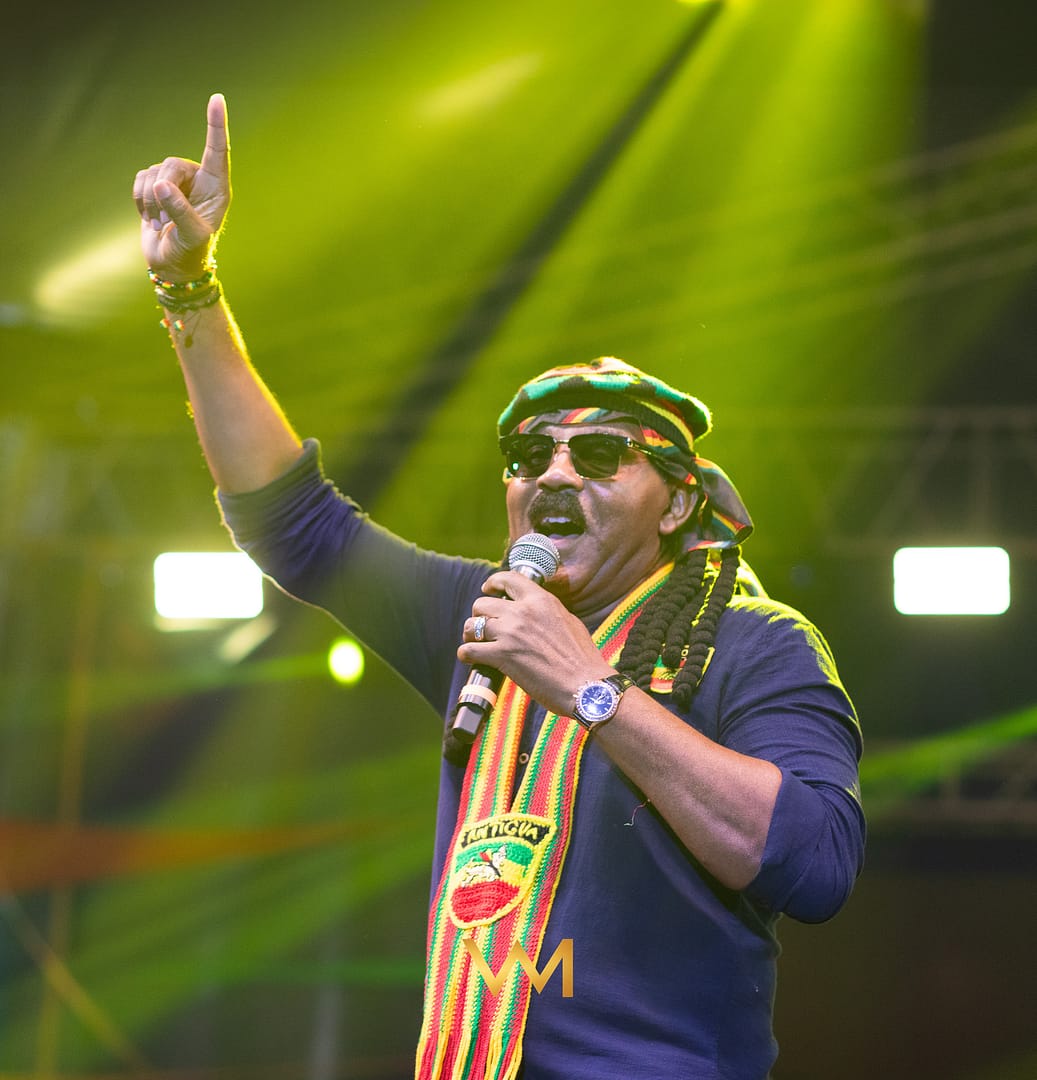



A new reggae collaboration released during Reggae Month is reviving the regional and global debate on reparations for slavery and colonialism.

Gramps Morgan has partnered with Gassy Dread—the recording persona of Gaston Browne—on a single titled “Reparations,” due for release on Friday. The track uses reggae’s protest tradition to spotlight the historical trauma inflicted on Caribbean societies and the unresolved legacy of the transatlantic slave trade.
Morgan said the song is intended as more than a musical release, describing it as part of an ongoing push to keep reparations firmly on the international agenda. He noted that its debut during both Reggae Month and Black History Month reinforces reggae’s role as a platform for political consciousness and social justice.

According to Morgan, the song seeks to re-engage audiences across the Caribbean and the diaspora, while also appealing to the global community to revisit long-standing demands for accountability and redress. He said the message is aimed not only at listeners, but at governments and institutions linked to colonial exploitation.

The artist added that this year’s Reggae Month theme, Rhythms of Resilience, reflects the song’s purpose—moving beyond remembrance toward renewed calls for equity and justice.
Morgan also welcomed Browne’s involvement in the project, saying the collaboration demonstrated a shared commitment to addressing historical injustice through creative expression. He described the Antiguan leader as focused and intentional in his contribution to the project.

“Reparations” was co-written by Morgan and Browne and produced by Justin “Juss Buss” Nation.
Advertise with the mоѕt vіѕіtеd nеwѕ ѕіtе іn Antigua!
We offer fully customizable and flexible digital marketing packages.
Contact us at [email protected]




Gaston doing what he does best. Chat big talk here but his message overseas is to beg borrow and ask for charity.
Love this, Gaston and gramp is going to give barbudans reparations, and retrieve all the lands taken by force at gun point using the military and police and given to Oppenheimer colleagues PLH acronym.
WONDERFUL NEWS!
A most DYNAMIC PM in the person of GASTON BROWNE 🚩🚩🚩🇦🇬🇦🇬🇦🇬🇦🇬🇦🇬🇦🇬🇦🇬
@❤️❤️❤️🔥 Cry all you want about Barbuda silly girl 😢, it will change nothing! PLH is just the beginning of an island wide change for the better and throwing a temper tantum like a child will not stop progress and additional opportunities to Barbudans. You can’t and won’t stop that but type your nonsense as if it has any effect in the real world.🤣😂
What wonderful news? The rebirth of King Boldface. He better don’t sing anything Trump don’t like.
Let’s Goooooooo GASSY DREAD ma say 🇦🇬🇦🇬🇦🇬🇦🇬🥳🥳🥳💫💯🤏
While he is busy pursuing his new found old age career, who is minding Antigua & Barbuda?
Comments are closed.