






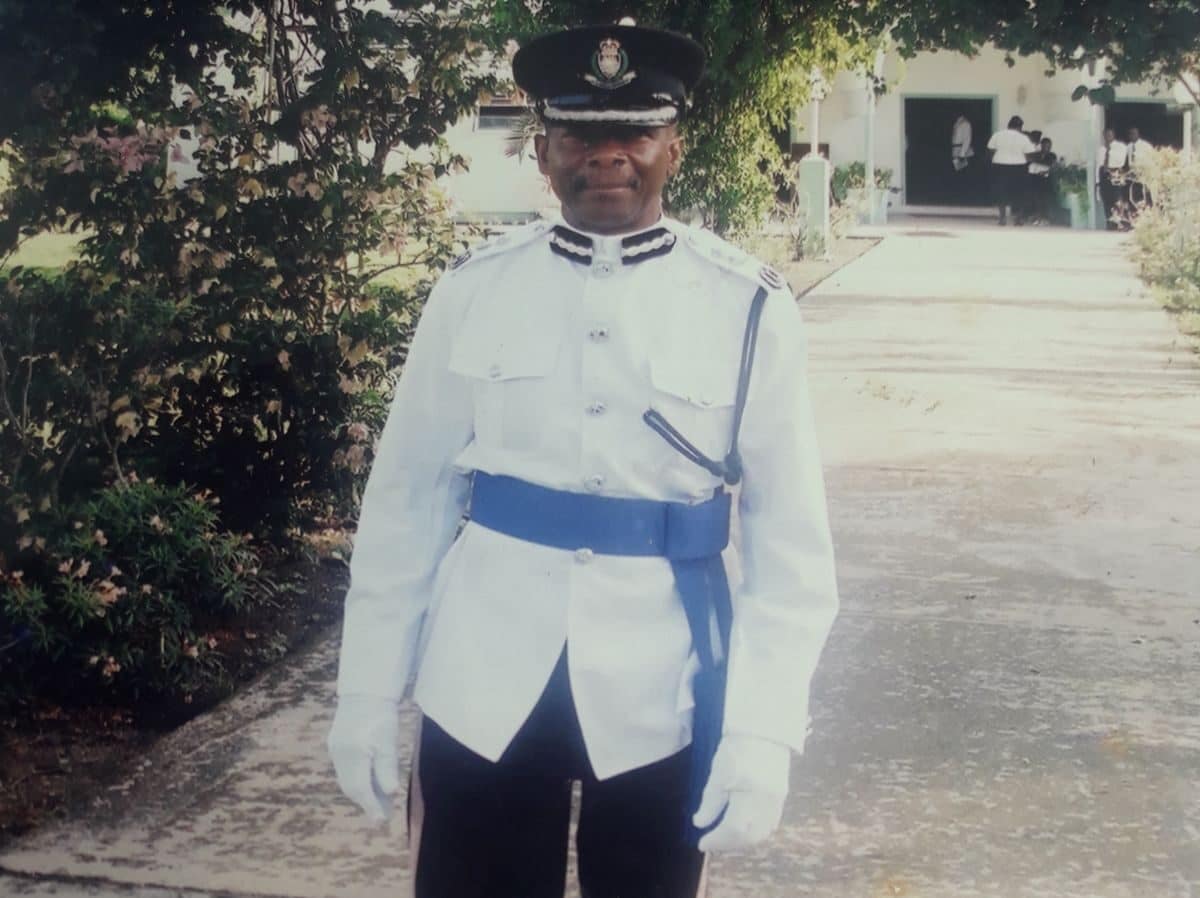



Former Police Commissioner Rawlston Pompey has raised concerns about the handling of the case surrounding the death of 9-year-old Chantel Crump, warning that delays and evidentiary gaps could jeopardize the prosecution.

In a lengthy public comment on the Antigua Newsroom blog, Pompey reacted to discussion about the matter and the possibility of it being struck out for want of prosecution — a legal term used when the prosecution fails to properly advance a case.
The case has not been dismissed.

Pompey, writing from what he described as a “professional perspective,” argued that charging a suspect before key forensic steps are completed can undermine a case. He said investigators should ensure that post-mortem examinations are conducted and that pathologists determine the cause of death before proceeding with serious charges such as murder.

He outlined what he described as the proper investigative sequence: establishing reasonable grounds for suspicion, gathering corroborating evidence, allowing the pathologist’s findings to be reviewed, and enabling the Director of Public Prosecutions to determine whether there is sufficient evidence to proceed to committal proceedings and ultimately trial by judge and jury.
Pompey suggested that haste, investigative shortcomings or public pressure can compromise cases. He warned that the criminal justice system must not be perceived as failing the victim’s family, the accused’s family or society at large.

Referring to the separate Vincia James matter, which collapsed at trial after a “no case submission” was upheld, Pompey described that prosecution as a “comedy of a trial” and cited it as an example of what can happen when charges are brought without sufficient evidence.
In the Crump case, Pompey acknowledged that the child’s body was recovered and that a post-mortem was conducted, but he noted that the reported findings on the cause of death were inconclusive. He questioned whether the file remains with the Director of Public Prosecutions and whether sufficient evidence exists to support committal proceedings.

He concluded by cautioning that prolonged evidence-gathering — medical or otherwise — can weaken prosecutions and erode public confidence in the justice system.
The matter remains before the courts.
Advertise with the mоѕt vіѕіtеd nеwѕ ѕіtе іn Antigua!
We offer fully customizable and flexible digital marketing packages.
Contact us at [email protected]




I would definitely blame the DPP for that one, should that case be thrown out. Before charges are laid, especially serious offences, the DPP has to give directives ok n regards to what charges are to brought again an accused person. The police follow those kinds instructions. The forensic department (especially) needs it’s own space, proper tools and a special vehicle for forensic usage only. The Antigua and Barbuda Police Service is on a strain in j terms of fighting crime . Proper vehicles, man power, overworked, investigators have to be on parades, some have their little sidelines ( to assist in maintaining their way of life, etc). Serious Crimes Dept and CID need at least 6 decent vehicles to respond to reports in ample time. Crime fighting is a task and the good men and women in those areas, need to left alone to do just that. Continue training in crime fighting is of utmost importance. Public awareness and public trust are paramount as well in solving crimes.
At least somebody can understand what Pompey writes
As we the public looks on, and cast judgements, the main fact of this case is still unknown, and that fact is, the true cause of death. Yes we clearly have an abduction of a child case, but this is some real wicked shit, especially by a female, to kill this innocent child, leaving her body in bushes, and returned home as if its just a normal day. I do hope our Detectives gathered and have all the evidence needed, pin pointing this one female to the murder, cause the crime scene is no more, and time is long gone.
Let me say it again! This same mess will happen in the Asot case, so long as the defence lawyer knows his job.
Our judicial system is already under intensive scrutiny. The Attorney General Steadroy Benjamin needs to keep a beady eye on this particular case, and ensures that it goes ahead come what may.
This murder case must take place not only because of the seriousness of the murder of a 9-year-old child, but also in the interest of the country that justice will be seen to have been done!
I side with former Police Commissioner Ralston Pompey…
@ Thanks for translating,
All they do is call up Pompey and have him explain then they write the article.
WHAT THE HEL…! …@THANKS FOR TRANSLATING: …MOST AMUSING
***
Well, @THANKS FOR TRANSLATING,’ your comment appears ‘…MOST AMUSING.’
***
WELL,
Been with ‘ANR’ ever since it came online by ‘…BRENTON HENRY,’ now an Attorney.
***
EDUCATIONALLY NEWSWORTHY:
Very fair to say that the Editors at ‘ANR,’ have been constantly on the lookout for that which they consider ‘…EDUCATIONALLY NEWSWORTHY.’
***
THAT THEY DO KNOW.
***
WHATEVER THE HELL, ‘POMPEY’ PROFESSIONALLY KNOWS,’ HE SHARES WITH READERS.
***
NOW, if anyone has to wait on ‘…ANR’ for ‘…TRANSLATION,’ there must be a problem.
***
Really not sure, just how this would be ‘…TRANSLATED.’
ASK: ‘…Attorneys-at-law, ‘…BRENTON HENRY or …CHARLESWORTH TABOR.’
***
POMPEY: knows there has to be a distinction between:
(a) ‘…A GOOD RACE HORSE: and
(b) …A GOAT.’
***
STILL, NEITHER FOR ‘…HORSE NOR GOAT.’
***
TWO THINGS:
(i) ‘…THEY POSSESS NO UNDERSTANDING: and
(ii) …THEY POSSESS NO READING SKILLS.’
***
THEY HAVE TO ‘PIT’ THEIR RUNNING IN THEIR OWN RACES.’
***
WHAT THE HELL…?
***
BRING CLOSURE AND APPEASEMENT TO THE ‘…FAMILIES’ MENTALLY SUFFERING LIKE HELL.’
***
EXPLAIN:
(i) ‘…THE ‘EVIDENTIARY REQUIREMENTS: and
(ii) …PROSECUTORIAL AND LEGAL IMPLICATIONS.
***
Gaston, Cutie, Comissioner Jeffers have some empathy, if thisbwa your chidk you would turn Antigua upside-down. This girl needs to be sentenced, we need to know what the motive was, and who she was working with!! This cannot go down this way, we have to protect our children. YOU’RE MAKING ALOT PEOPLE MAD!!
GASTON YOU SAY GOOD GOVERNANCE? WE NEED TO SEE BETTER FROM OUR JUSTICE SYSTEM.
I am 100% sure this young woman will not have a fair trial so that the parents of the child can get justice in this matter. I demand this case moves to another jurisdiction. There are literally literally no other options (if there must be a trial).
I am warning the ABLP Attorney General to make arrangements.
This case is botched..GB already came out and side with the defendant in this case, because he needs the votes of the Spanish community.
Politics is deep in this case, and I wouldn’t be surprised one bit if she walks away from the murder charges and get sentence for the kidnapping only.
When an autopsy cannot reveal a cause of death, it’s almost impossible to reach the burden of ” beyond responsible doubt”.
Sorry folks, just calling the situation as I see it..feelings doesn’t make cases, evidence does, and no one can tell how this girl died.
Pompey is absolutely in point here, and I’ve said as much in the past.
Mr. Pompey, I mean no insult and I know your contributions are always packed with information as a former commissioner and patriot. It can be a little difficult to decipher, even for a university graduate like myself. I do appreciate the “translation” because it makes it a lot easier to digest.
Comments are closed.