






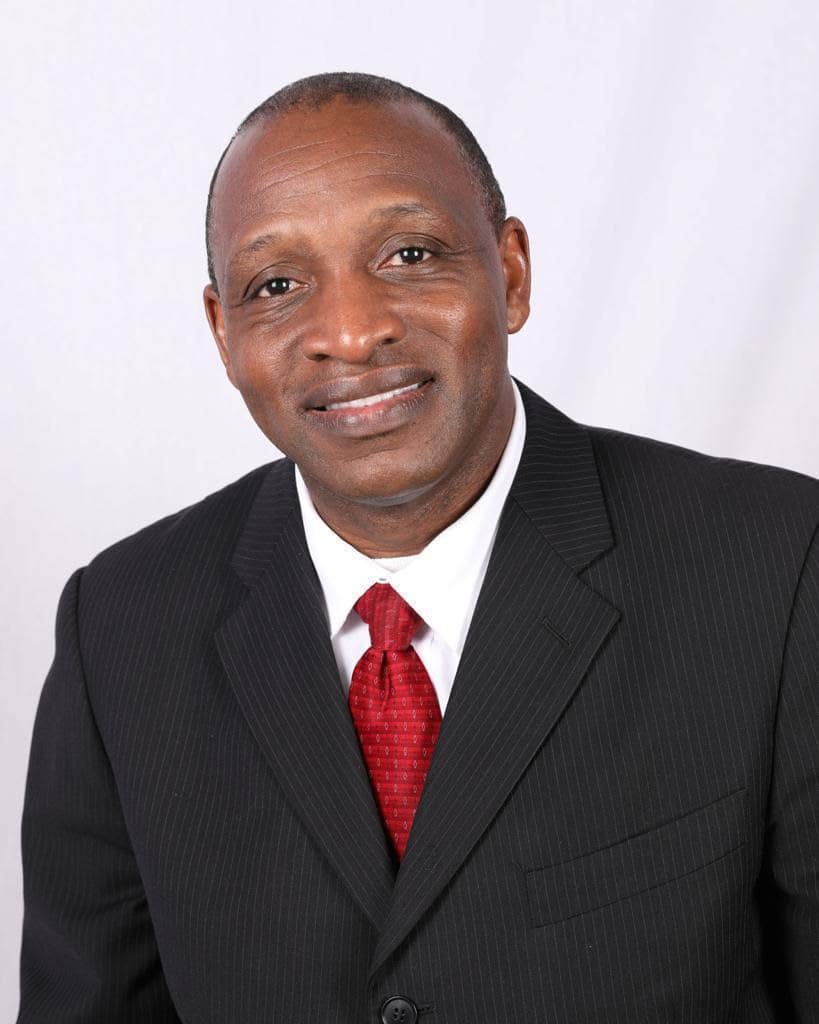



By Dr. Isaac Newton

What happens when the world starts paying for what you can do, but your country keeps asking where you studied?
As the old Caribbean saying reminds us, what yuh have in yuh hand is better than what yuh eye see. Yet across the region, we keep searching beyond our shores for value while overlooking the talent already in our grasp.

A World That No Longer Waits
The global economy has changed its rhythm. Work no longer sits still in offices or waits politely for permission. It moves fast, follows skill, and rewards action. Artificial intelligence has sharpened this reality, favoring those who can learn quickly, adapt confidently, and solve real problems. While the world races ahead, much of the Caribbean remains tied to an older script, one that assumes degrees lead naturally to jobs and that progress arrives through planning alone. As migration routes tighten and competition intensifies, this mismatch is no longer manageable. It is costly and deeply personal.

The Talent We Walk Past Every Day
The Caribbean’s most painful weakness is not scarcity of ability, but scarcity of belief. Too many capable people are seen only after they leave. Local competence is questioned, while foreign credentials are trusted without hesitation. Young people learn early that promise must wait and initiative must be approved. Leaving, then, becomes less about ambition and more about survival. Over time, this quiet pattern teaches a damaging lesson. Excellence is something you import, not something you grow.
Why Schooling Cannot Carry the Future Alone
Education still matters, but it cannot be expected to do everything. Skills now develop in motion, shaped by digital tools, real world problems, and constant experimentation. Learning is no longer a phase of life. It is the work itself. The economies that succeed are those that clear a straight path from ability to opportunity. Without access to capital, platforms, mentorship, and fair rules, even the most educated citizens are left circling the edges of possibility.

Talent Goes Where Life Works
People do not migrate because they dislike home. They migrate because systems make staying too hard. Talent moves toward places that respect time, reward effort, and reduce friction. This is why talk of brain gain has not delivered change. Attraction requires design. It means welcoming returning nationals with seriousness, inviting skilled newcomers with clarity, enabling remote work, and allowing talent to move freely across the region. A growing population of skilled contributors is not a threat to small states. It is how small states grow.
Artificial Intelligence and the Small Place Advantage
Artificial intelligence has quietly shifted the balance of power. It allows individuals in small places to compete in large markets. It makes it possible to export services without exporting people. This gives the Caribbean a rare opening. But AI does not rescue broken systems. It amplifies them. Where local talent is ignored, AI speeds departure. Where contribution is trusted, it multiplies impact and reach.

Choosing What We Value
The future of the Caribbean will be shaped less by who leaves and more by who is welcomed, trusted, and empowered. Progress begins when skill is recognized, effort is rewarded, and opportunity is accessible. When people feel seen, they stay. When they are taken seriously, they return. And when excellence is expected at home, it attracts excellence from elsewhere. The world is moving quickly and without apology. The question is no longer whether Caribbean people can succeed globally. It is whether the Caribbean is ready to choose its own.
EDITOR’S NOTE: Dr. Isaac Newton is an international strategist trained at Harvard, Princeton, and Columbia. He advises governments and global institutions on governance and development, helping leaders turn ideas into practical and lasting results.
Advertise with the mоѕt vіѕіtеd nеwѕ ѕіtе іn Antigua!
We offer fully customizable and flexible digital marketing packages.
Contact us at [email protected]




You make some good points.
Issac is slowly becoming aware of many of the deficiencies in the Caribbean.
There is nothing in his writing that suggests he has any of interest to offer.
I question the value of his advise as well as anyone who would hire him.
This is another example of credentialized individuals who say and write BS that has no basis in reality.
Dr. Isaac Newton claims he is an international strategist trained at Harvard, Princeton, and Columbia and he advises governments.
His writing does not reflect any serious understanding of what are the issues facing the Caribbean.
His writing is dimly rhetorical gibberish. It’s unfortunate given his credentials.
The future of the Caribbean is being shaped by its institutions.
The Caribbean media are weak and many are just political pawns.
Its academic institutions turn out degrees as degree mills, and not the knowledge and skills needed for a grouping of undeveloped islands.
Its judicial institutions are weak. A fact that those who are responsible would not admit too.
CARICOM is failing as shown from recent events. CSME is still in the incubation phase.
Regional transoceanic transport is still being conducted on a micro basis while its Governments adopt the phase “Food insecurity” as a political slogan
Guyana is the only Country worldwide that is food secure. What has the rest of the Caribbean learned.
Regional academic institutions mention Ai Ai Ai and not one of them are having students write programs that can solve problems and address individuals and institutional needs.
The underlying problems hampering the Caribbean is corruption. Corruption leads to bad thinking, bad policies and bad outcomes.
Unless any adverser or strategist do not recognize that factors and bring about
@CIFIR
There are folks with solutions but ABLP constantly refuse to accept experts. However, that will not stop me from attempting through this platform to help my people. So, your statement to Dr. Newton maybe unfair. It is not whether he offers solutions because I am pretty sure he does, based on his writings, but whether ABLP are open to accepting help from experts and the answer to that is a no.
Great article.
Studiation beats education. Read a book for relaxation and to hold your own in conversation. Pick up a tool to build and maintain your bridges in life.
We have come, we have gathered, and we have robbed.
Corruption is what has Africa and the Caribbean where it is today.
The foundation of the earth remains the same..the principles of society and how man should live has already been set.
What we are missing is the foundation, so we continue to build on sand and expect things to be great.. 😂.
I respect everyone’s opinion, but this is another article that epitomizes the term ” they strain at a gnat but swallow a Camel”.
God has created everything for us to live and survive, and it’s corruption and greed that have us here.
All this ” AI” talk cannot fix it.
Get rid of greed ( one of the deadliest sins) and you will fix many a problems.
Simple rule of foundation.
Comments are closed.