






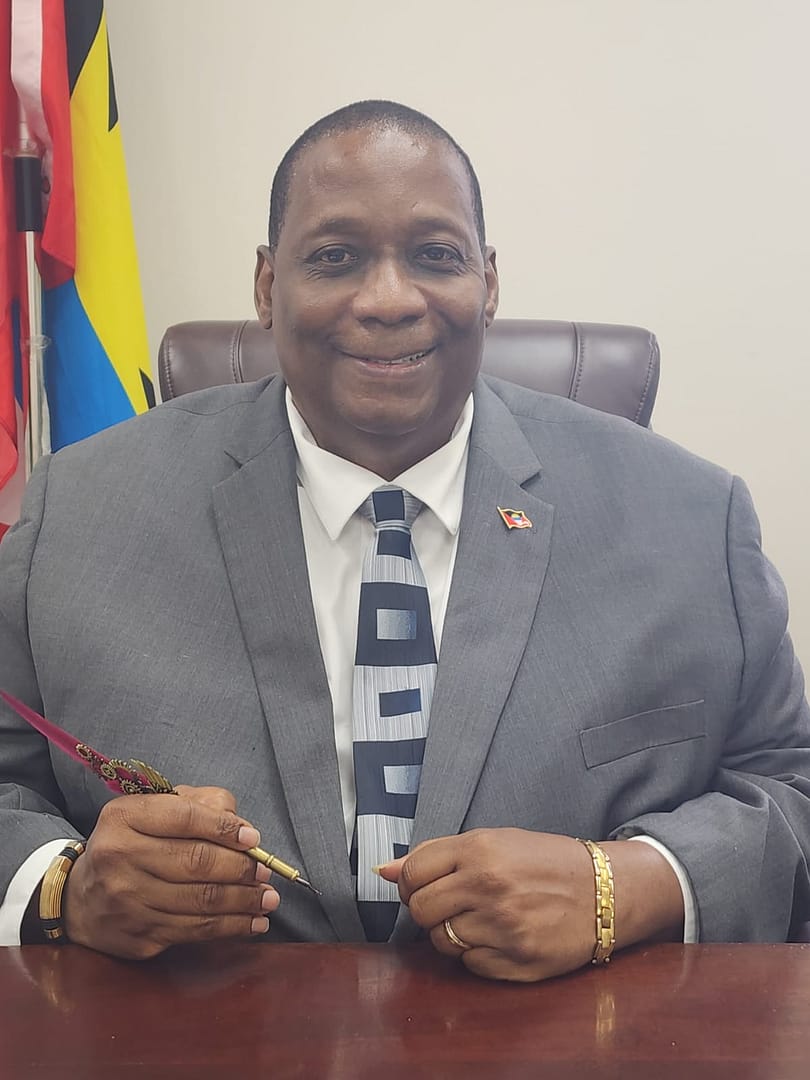



By Ambassador Dr. Clarence E. Pilgrim

The preceding articles in this series have examined both the immediate dangers of escalating global conflicts and the wider consequences of instability across regions. From the Middle East to Africa, from Eastern Europe to fragile states across the developing world, a consistent pattern emerges: modern conflict is no longer isolated. It is interconnected, systemic, and increasingly global in its consequences.
The conclusion is therefore clear. Peace does not endure by sentiment alone; it must be deliberately built, structured, and sustained.

In an era defined by economic interdependence, shared environmental systems, and integrated global networks, instability in one region inevitably reverberates across all others. Conflict disrupts supply chains, increases the cost of living, weakens institutions, and undermines decades of development progress. The world can no longer afford to treat peace as an aspirational ideal. It must now be understood as a strategic necessity.

At the heart of this argument is a simple but demanding proposition: peace must be organized at every level—global, regional, national, and human. It must be reflected in the way nations interact, the way societies coexist, and the way humanity relates to the natural environment upon which it depends.
This gives rise to three interdependent principles:

Peace among nations.
Peace among peoples.

Peace with our environment.
These are not abstract concepts. They are the conditions required for stability, prosperity, and the continued advancement of human civilization.
Achieving them requires strengthening the institutions responsible for managing international cooperation—most notably, the United Nations.
The United Nations, comprising 193 member states, remains the most comprehensive multilateral institution ever created. Yet its structure reflects the geopolitical realities of 1945, not the complexities of the twenty-first century. Institutions that do not evolve risk losing legitimacy; and when legitimacy weakens, so too does compliance. In such circumstances, the capacity to prevent conflict and enforce collective decisions is diminished.
Reform is therefore not optional—it is necessary. A more representative and responsive system, capable of acting decisively in the face of global challenges, is essential. This includes re-examining the composition and functioning of the Security Council, addressing structural imbalances, and ensuring that mechanisms for collective action are not rendered ineffective by procedural constraints.
At the same time, global peace will not be secured by global institutions alone.
Peace succeeds or fails first at the regional level. It is within regions that tensions emerge, disputes escalate, and opportunities for early intervention either succeed or collapse. Regional institutions must therefore form committed, coordinated partnerships dedicated to promoting dialogue, resolving disputes, and reinforcing stability among neighboring states. Where regional diplomacy is strong, conflict can often be prevented. Where it is weak, crises deepen before the wider international community can respond.
Economic cooperation also plays a central role. Nations that are interconnected through trade, transport systems, and shared economic interests are less inclined toward conflict because stability becomes mutually beneficial. Deeper economic integration strengthens interdependence and reduces the incentives for confrontation.
Beyond economics, the pursuit of peace must extend into scientific and environmental cooperation. The sustainable use of ocean resources, the protection of biodiversity, and the management of climate systems are collective responsibilities. Oceans cover approximately seventy percent of the Earth’s surface, yet their potential remains only partially understood. Unlocking the benefits of the Blue Economy requires cooperation, not competition.
Similarly, international collaboration in science and technology—including space exploration—demonstrates what humanity can achieve when it works toward shared goals. Such cooperation accelerates innovation, improves resilience, and expands the boundaries of human knowledge.
Underlying this framework is a philosophical choice. Some traditions argue that policy should aim to achieve the greatest good for the greatest number. While this principle has shaped much of modern governance, it is no longer sufficient in a world where inequality, exclusion, and instability remain deeply interconnected. Humanity must strive instead for a higher standard—the pursuit of the greatest possible good for all. Peace, to be durable, must be inclusive.
History provides ample evidence that reconciliation is not weakness, but strength. Leaders such as Nelson Mandela and Martin Luther King Jr. demonstrated that dialogue, justice, and moral clarity can transform societies and alter the course of history. Their legacy reinforces a fundamental truth: peace is not passive. It is constructed through deliberate effort, sustained commitment, and principled leadership.
It is perhaps unsurprising that some have begun referring to this approach—sometimes with skepticism—as the “Pilgrim Doctrine.” In certain quarters, the term is used not as endorsement, but as a suggestion that the vision it represents is overly ambitious or impractical. I accept this characterization with humility, but not with hesitation. Many of the ideas that have ultimately shaped human progress were once dismissed as unrealistic. The circumstances we now face are not theoretical. They are immediate, measurable, and consequential. To respond effectively requires not caution in thinking, but clarity of purpose.
The choice before the international community is therefore stark. The world can continue along a path marked by geopolitical rivalry, fragmented cooperation, and recurring crises. Or it can take deliberate steps toward building a system that prioritizes stability, coordination, and shared progress.
The creation of zones of peace is central to this effort. These zones are not passive spaces free of conflict; they are structured environments in which nations commit to dialogue, cooperation, and mutual respect as the primary means of resolving disputes. They represent a shift from reactive crisis management to proactive stability building.
The task before us is no longer to imagine peace in the abstract, but to build the institutions, partnerships, and habits that make it durable. If we fail, instability will continue to define this century. If we succeed, peace will become not merely an aspiration, but the governing architecture of human progress.
H.E. Clarence E. Pilgrim
Permanent Secretary
“Ours can be the first generation to end poverty – and the last generation to address climate change before it is too late.”
Advertise with the mоѕt vіѕіtеd nеwѕ ѕіtе іn Antigua!
We offer fully customizable and flexible digital marketing packages.
Contact us at [email protected]




Another excellent piece from the author! This is well written! Our world needs peace!
Congratulations on a great feature commentary! We need more of this!
Looking forward to more great pieces like this not only from this writer, but from.other intellectual writers. We all need to promote peace at every level.