







by Cdr. Bud Slabbaert

Technology is accelerating, traveler expectations are shifting. The Caribbean is at a crossroads. By combining AI with Behavioral Psychology, one gains something powerful: the ability to design systems around how people actually behave, not how it is assumed they behave. In governance, that means services that build trust. In tourism, it means experiences shaped by emotion and culture. In air transportation, it means understanding the Caribbean traveler and strengthening route viability. Together, these insights form a unified intelligence strategy that makes our region more trusted, more competitive, and more connected. This isn’t just modernization, Caribbean transformation, powered by data, guided by psychology, and anchored in culture is a new blueprint for Caribbean transformation.
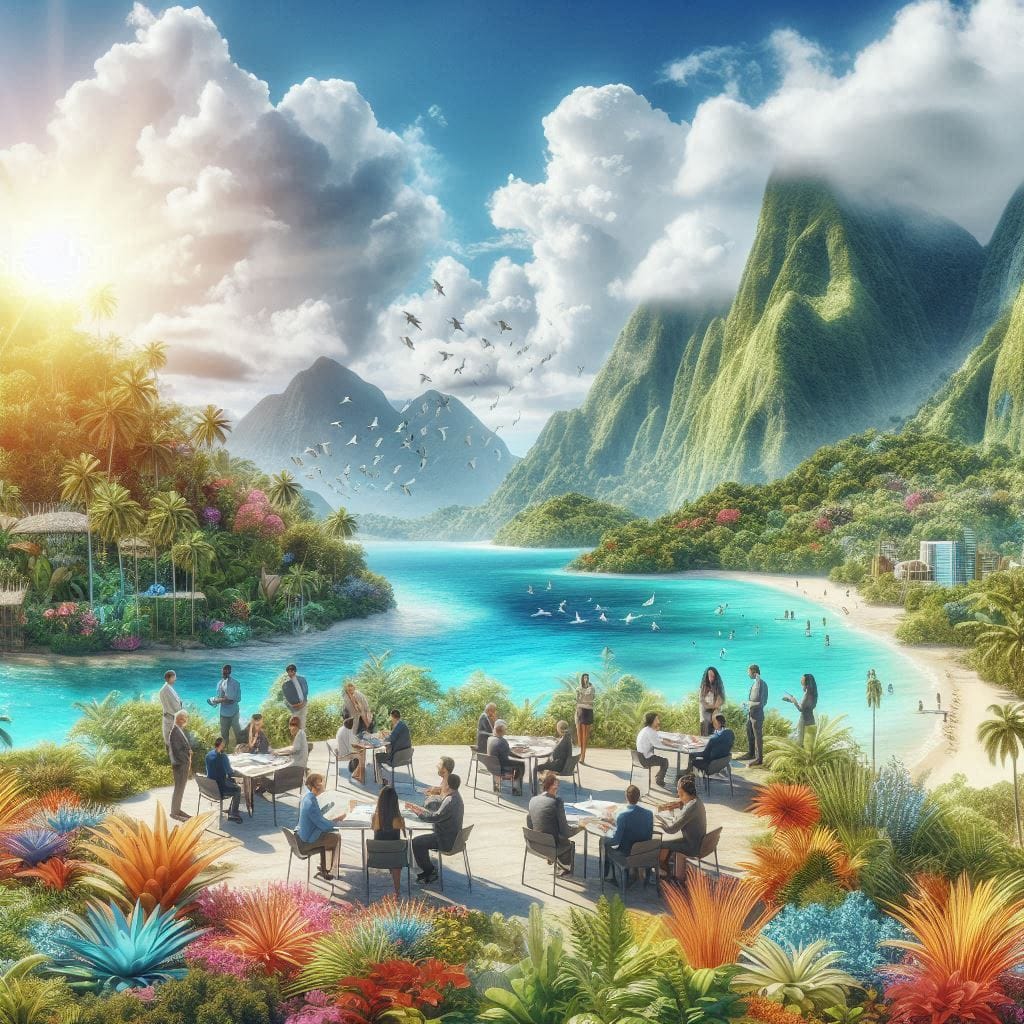
The Caribbean is being reshaped by forces larger than any one island: technology, climate, global mobility, and the rising expectations of its people and its visitors. But the truth is simple: the future of the Caribbean will not be built by technology alone. It will be built by understanding people. That is where AI and Behavioral Psychology come together, as tools for designing a Caribbean that is more trusted, more competitive, and more connected. A model built specifically for the region could be called: “the Caribbean Human‑Centered Intelligence Framework”. It unites three pillars of development, governance, tourism, and air transportation, into one human‑focused strategy.
1. Governance: Trust through adaptive intelligence. AI helps to see patterns in how citizens use services, where frustration builds, and what communities need before they ask. Behavioral psychology explains why people behave the way they do, why they avoid certain processes, why trust rises or falls, why some messages resonate and others don’t. When combining the two, one gets predictive governance with services designed around real human behavior. Policies are tested before they are launched. And communication shaped by culture, not bureaucracy
2. Tourism: Experiences move people. Tourism is the region’s global identity. AI can now map what travelers search for, what inspires them, and what makes them choose one island over another. Behavioral psychology explains why scarcity drives bookings, why authenticity matters, and why diaspora travelers respond to identity cues. Together, they allow to design emotion‑driven tourism. The Caribbean can lead the world in tourism that is powered by culture and guided by behavioral insight.
3. Air Transportation: Understanding the Caribbean Traveler. Air transport is the region’s bloodstream. AI can analyze passenger flows, booking patterns, and stress points in the airport journey. Behavioral psychology explains why reliability matters more than price, why respect shapes loyalty, and why symbolic gestures — like first‑flight ceremonies, matter in our region. Together, they create passenger‑centered aviation and build a more connected Caribbean.

The real power emerges when all three sectors are connected. Governments, tourism boards, airports, and airlines all serve people, and people behave in patterns that can be understood, predicted, and shaped.
A unified Caribbean intelligence system would allow anticipating visitor flows and improving route viability. This is not just modernization but rather Caribbean transformation. The question is no longer whether AI will shape the Caribbean. The question is whether AI is shaped to serve the Caribbean. If one combines data with culture, technology with behavioral psychology, one can build a region that is not only smarter, but stronger.

Advertise with the mоѕt vіѕіtеd nеwѕ ѕіtе іn Antigua!
We offer fully customizable and flexible digital marketing packages.
Contact us at [email protected]




Why not just ask people what they want… Many years ago, watching DJT’s The Apprentice show, I noticed that the team that won each challenge, running the more successful business attempt, was usually the one that convened a focus group to gauge public reaction to their ideas and make adjustments before launching them. The other group just assumed that other people would respond well to their ideas and made fewer dollars in the end. So, knowing what people want is important, but I am not convinced that AI is a good replacement for simply asking people for their opinions and listening with an open mind. Using psychology to entrap customers has been practiced for quite some time now in supermarkets, stores and online. It provides short term increases in profits but people know when they are being manipulated and will walk away as soon as a different business that respects their actual stated needs opens up. The Caribbean should not gamble its future on psychological exploitation of people. If you want to know what citizens want, just ask them, or pay attention to what they have been commenting all these years. If you want to know what tourists want, just ask them, or use your own human intellect. Obviously, some are fleeing cold weather for a while, some want adventure, seeing new places and features of the earth, some want to experience other cultures, and some want rest and relaxation. The question is what are we choosing to provide at our locale? We have a reputation for laid back living so I don’t think creating a super high tech society is what tourists seeking R and R are really hoping for. It would actually be better to maintain a low tech ambiance, allowing visitors to reconnect with nature and wholesome cultural activities. Technologies can be utilized in the back end of things to run certain aspects more efficiently, but does not really need to be at the forefront of island life.
Comments are closed.