









By Brent Simon
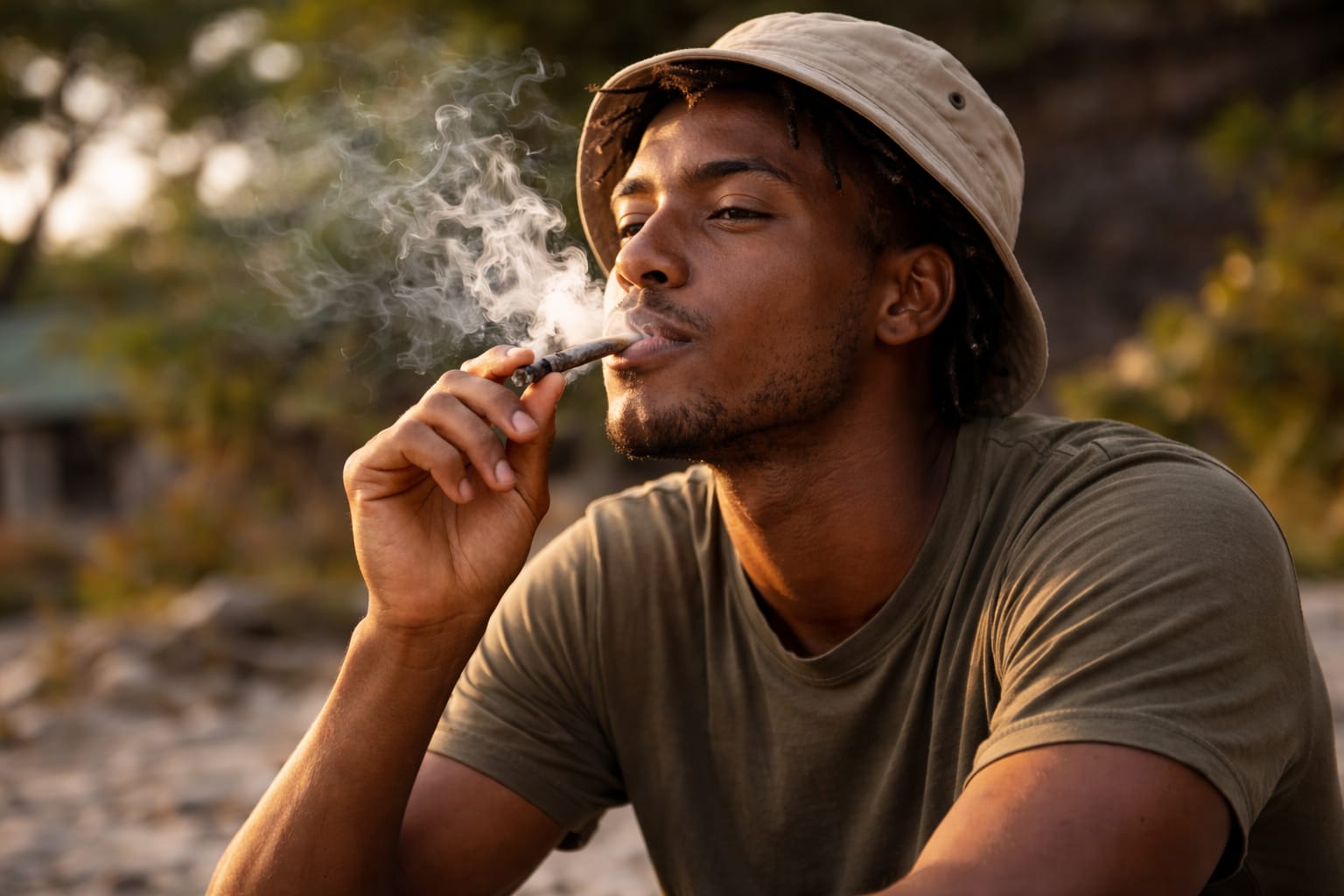
Across the Caribbean, cannabis policy sits in a strange middle ground between reform and denial.
Several jurisdictions have moved to decriminalize the possession and private use of cannabis, acknowledging both the cultural reality of the substance and the failure of strict prohibition.
Yet at the same time, these same laws often maintain rigid prohibitions on public consumption, insisting that cannabis must remain confined to “private spaces.”
This contradiction exposes a deeper policy problem: the region has begun to recognize the existence of cannabis use, but it has not yet decided how to responsibly manage it within public life.
The core issue is not whether cannabis exists in public spaces.

It clearly does. In practice, cannabis use already occurs in parks, beaches, roadside gatherings, and social events throughout the Caribbean.
Attempting to legislate this reality out of existence through blanket public bans does not eliminate the behavior; it merely places it in a legal gray area where enforcement becomes inconsistent and often arbitrary.

Laws that contradict everyday reality risk eroding respect for the legal system itself, particularly when citizens observe that the rule exists largely on paper while the behavior continues openly.
This tension is particularly pronounced in societies where smoking, in general, remains a culturally embedded practice.
Tobacco smoking, barbecue smoke, vehicle exhaust, and other airborne pollutants occupy the same public spaces that cannabis smoke is being singled out from.
When cannabis laws are written as though the act of smoking itself is uniquely incompatible with public space, they fail to engage with the broader reality that public environments already contain many forms of smoke.
A policy that treats cannabis smoke as an exceptional moral threat while ignoring these other sources risks appearing less like public health policy and more like the lingering stigma of an earlier prohibitionist era.
A more coherent regulatory approach would begin by acknowledging that public space is shared space.
The purpose of regulation should therefore be to balance competing interests: the freedom of individuals to engage in legal behavior and the right of others to enjoy public environments without undue disturbance.
Rather than maintaining an unrealistic blanket prohibition, governments could adopt a framework similar to those used for other regulated activities.
This could include clearly designated consumption areas, restrictions near schools or sensitive environments, and consistent standards governing smoke exposure regardless of its source.
Such an approach would shift the conversation away from moral symbolism and toward practical governance.
The goal would not be to promote cannabis use, but to regulate it in a way that aligns law with social reality.
By defining where consumption is acceptable and where it is not, governments would provide clarity to both citizens and law enforcement, reducing the ambiguity that currently surrounds public use.
The Caribbean has historically demonstrated the ability to adapt legal frameworks in response to changing social conditions, whether in areas of trade, tourism, or cultural expression.
Cannabis policy represents another such moment of transition. Decriminalization was an important first step in acknowledging that punitive prohibition had failed.
However, reform remains incomplete if it stops at partial acceptance while leaving fundamental contradictions in place.
Ultimately, the region faces a simple policy choice. It can continue to maintain laws that symbolically deny the presence of cannabis in public life, or it can develop regulatory systems that manage the reality responsibly.
The latter path requires honesty about how societies actually function, as well as a willingness to treat cannabis as a public policy issue rather than a moral anomaly.
If the Caribbean is serious about modernizing its approach to cannabis, the next stage of reform must move beyond denial and toward practical regulation of the spaces where people live, gather, and interact
Advertise with the mоѕt vіѕіtеd nеwѕ ѕіtе іn Antigua!
We offer fully customizable and flexible digital marketing packages.
Contact us at [email protected]



Lets address the core issue of this false decriminalization of herb, (wa come first the plant or seed). The herb seed is still illegal in Antigua and Barbuda and you can still to prison if an arrogant ignorant police officer want to be devious. The whole concept of decriminalization of herb in Antigua and Barbuda was a grab for votes and the blind fools took the bait. I don’t care for any political party so my comments are politically motivated. The people (Rasta and ballhead) who sat on the board to legislate decriminalization of herb only did things for their own gain and agenda and they should be ashamed of the deal they set up to mislead the public.
Do I believe there need to better legislation for decriminalization of herb yes, because there are too many young people ages 9 to 16 who are smoking and they have no knowledge of what they are doing to their bodies. Many of these young people use more high leaf AKA GRABA than herb and this raw tobacco is killing them and they don’t even realize it. They need to outlaw high leaf.
Another thing I find hypocritical of the Royal Police slave catchers of Antigua is the commentary from the commissioner stating any public smoking of herb and cigarettes will result in a $2000 fine and immediate arrest, so I am sure this immediate enforcement will only apply to the dark skin people in Antigua and Barbuda. The Syrians, Mzungus (white people), Chinese, Indians and tourists who are not dark skinned will be exempt because the police will never enforce any laws against their masters who pay their salary and give them handouts. They are going to be more willing to arrest young black men and fine them $2000 smh true shame. Slavery and colonialism never ended it just changed it’s features.
Government and police regulations regarding ganja (marijuana) smoking are widely characterized by an inconsistent approach that often lags behind public usage trends, with our government and police appearing to take action only after widespread adoption, much like responding to a “hit and run”. We seem to be navigating a complex “patchwork” of policies, struggling to balance decriminalization or legalization with public safety concerns. Many of the vehicles on our roads and the exhaust that they emit as well as the public dump are doing far more harm to public health and safety than the marijuana smoking.
So I want to know if those people who drive every day using air conditioners and those who make a living burning coal smoke to jerk food going still complain about weed smoking in public the hypocritical minds.
@lionman…
…the truth shall set you free! Most Antiguans are so afraid, of the truth, that when they reason with good and evil, they can’t even recognize which is witch, or witch is which.
It’s said that, money is the root of all evil, but as you live, the truth of our realities we realize, politics is the root of all evil.
U a reason wid nuff truth!
Jumbee_Picknee aka Ras Smood
De’ole Dutty Peg🦶🏿Garrate_Bastard
Vere Edwards
I lived in Colorado.When the law authorized the legality of marijuana. However,you cannot smoke it openly.It must be smoked in the cafe’s and in your home.That is what Antigua should have done. No smoking in the public of weed.There should have been an age limit in regards to usage of that product.It is done with alcohol.So why not marijuana.I do not want to be walking around St.Johns and smelling it all day.
@THE FALCON AND THE SNOWMAN…
A…this non-smoking in public policy is simply to make Antigua look good in the eyes, of the rest of their commonwealth compatriots visiting for the CHOGM in several months. They can’t have Antigua (St. John’s in particular) looking like an open air drug market with roaming dope heads.
B…at least, the synthetic marijuana smell (horrible because of the chemicals used in the hybridization process) will help to keep the other funky smells. Some say it can get real shitty at times.
C…read what @lionman is saying, again. The decriminalization/legalization was for two things…
(i)…votes for the ABLP from the unsuspecting Dread Heads, Rude Boys and Rastas. (Not political just calling it for what it is. You can recall some of my thoughts from the good old CARIBARENA days; when the UPP feet were being held to the fire).
C…As Scorpion would say, “Is joke U joking;” I’m speaking to your mentioning, of the age of consent for purchasing and consuming alcohol😀😀😀 do you realize, that children can still enter RUM SHOPS, liquor stores, supermarkets and purchase alcohol legally?
Now, here’s the kicker to the hypocrites, in terms of “legal age” to behave as adults, you are aware, that the legal age when a teenager can legally have sex and get married to an adult without parental consent is sixteen (this law is still on the books, nah)?
And, there’s no need to even mention the budding fete scene where alcohol and of course the synthetic weed set the tone for the #Skin_Out, #BRUK_It_Aff live free porn shows.
Antigua lost her innocence decades ago. Many of [us] just don’t want to admit it.
I can guarantee you this, when you visit Antigua now, versus 20 years ago, you’d worry and watch your back moreso, in places like Point & the Mud if you weren’t familiar with these communities, today you watch your back 24/7 from English Harbour to Cedar Grove and Devils Bridge to Fort James, and it’s not just teenagers nor weed smoke which distracts or disturbs you. Don’t ☄️shoot the messenger, and miss the meteoroids crashing the culture. Let’s hope that the weed smoke don’t obscure the CCTV Cameras searching for guns and criminals.
Jumbee Picknee aka Ras Smood
De’ole Dutty Peg🦶🏿Garrate_Bastard
Vere Edwards
In decriminalizing the use of cannabis, the government failed badly to protect the youth from dangers of its use. So just go to east bus station in a school day and you will see the problems the police are having. There should be designated places or areas where smoking can be done in public. There should be laws to prevent and protect anyone below the age of 18 years old from smoking period and further no one under the age of 21 years should be allowed to smoke in public.
We also need to look at the legal growers- what are they doing with the marijuana they are growing. Let us look at a few of these farms- Ras Freeman, the one on the road leading to Willikies , the Rastas in Bendals and those at Big creek. At first they were given zones or a particular area or acreage that they can grow marijuana. Today they have expanded and continues to expand. The agriculture office dear not address this issue.
Secondly what are they given license to grow cannabis for. Is it primarily for smoking. Since this is exactly what is happening. So these Rasta communities- legal growers are not only expanding but are growing primarily for smoking purposes. It is a fact that distribute to pushers throughout Antigua and Barbuda.
This easy access, consistent supply, to the youth , talking about right down to primary school children is a major and lasting problem. It is creating Zumbies in schools and our communities. These communities should be made to give account for every plant they grow/ what is sacramental and what is supposed to be processed. Unless this is done we are destroying an entire generation of children. To compound that no children should be allowed to visit any of these cannabis farms. There are school trips on a weekly basis to these cannabis farms. They use the school buses to take our children on these farms. What is the ministry of Education policy in this issue.
Thirdly the law also give allowance for every home owner to grow marijuana trees at a time. This alone can produce enough cannabis to flood Antigua and Barbuda. One properly grown tree in a large container can give up to 1lb of cannabis. So someone can grow enough cannabis to make a decent living by just growing 4 plants in their backyard. This is also a contradiction in the amount you can produce at your home and the amount you can store. This also exposes children at home to the growing and smoking of cannabis. Young people are adventurous. Do you think if marijuana are planted in the back yard , can a parent who is working prevent their children from smoking- impossible.
The negative impact, especially to the poor and vulnerable has already done tremendous damage. Instead of families with young boy are using education to uplift. They are losing their sons to the smoking of marijuana, plain and simple.
At every event, cultural, fete and even sport you are bombarded with marijuana smoke. Check out YASCO today and you will see the amount of your boys and girls in a corners , in little hide away spots smoking.
In thd contrary go to any sporting event in the USA and none of this is displayed. It’s popcorn, hot dogs and drinks and cotton candies .
Cleon Athill was punished as an educator , a counselor,a parent and head of the youth development for warning the government about this very issue. All she asked is to put check and balances to protect our children. She was sent to the stadium to literally count grass. Today she is still crying… .
Anytime me see any of them lawyers up high court ah smoke cigarette outside and the Police an dem na do nothing me ga record um….. ok den…..
PUT UP NO SMOKING SIGNS IN TOWN AND AT PLACES WHERE NO SMOKING IS ALLOWED……SIMPLE……IN YOUR VILLAGE YOU SHOULD BE ABLE TO SMOKE YOUR JOINT IF YOU OUTSIDE CLEANING YOUR GUTTER OR TALKING TO YOUR NEIGHBOR………DON’T TELL ME SHIT BOUT ATMOSPHERE WHEN THERE ARE JET PLANES AND CARS POLLUTING THE AIR EVERY SECOND…….SMOKE IN YOUR CAR, SMOKE IN YOUR HOUSE, SMOKE IN YOUR VILLAGE…SHOPS AND BUSINESS PLACES THAT HAVE NO SMOKING SIGNS SHOULD BE RESPECTED…IF YOUR WALKING IN ST. JOHN’S YOU SHOULD NOT BE SMOKING WAIT TILL U GET TO YOUR CAR OR YOUR VILLAGE…..PROBLEM SOLVED………I DON”T THING POLICE SHOULD TROUBLE ANYBODY JUST A FEW FEET FROM THEIR YARD SMOKING ESPECIALLY IF THE PERSON NOT AROUND ANYONE…….
Barbeque grill smoke is not healthy and poses significant health risks. It contains toxic substances—including PAHs, VOCs, and ultrafine particles—linked to cancer, respiratory issues, lung damage, and potential skin absorption. Inhaling this smoke can damage nearly every organ, while charred food also contains high levels of carcinogens. YET STILL PEOPLE STAND AROUND GRILLS RIGHT AT THE BACK OF THE POLICE STATION ON CHURCH STREET WEEKEND TIME…..BUT YEAH IT”S BBQ IT SMELLS NICE RIGHT???? IT’S NOT HEALTHY EITHER!!!!!!!
ALL THAT’S HAPPENING IS ELECTION IS NEARING AND THE GOVERNMENT HAVE TO PLEASE THE PEOPLE WHO ARE BOTHERED WITH SMOKERS….THE SAME PEOPLE WHO WILL STAND AROUND A BBQ GRILLE……SMH……….
So the fact that the crackdown is for both tobacco and cannabis was clearly stated by Deputy Commission Wade doesn’t matter? Ok then.
It’s a bunch of rubbish! Giving something with one hand , then taking it away with the other. It’s a whole confusing policy and, it’s the police who are left to carry out the dirty work of policy makers. I am no smoker and, I agree to a point with the smoking 🚬 in public thing but, it was too sudden, harsh and irrational. What about sensitization? Where are the awarenesses so smokers can be put on guard? If a tourist comes off a cruise ship 🚢 or from the airport and start smoking, bam, he/she gets arrested when there’s obviously, no knowledge of that particular crime. The comfort zone I too comfortable so, regulations can be flung everywhere for the police to enforce. Better can be and, should be done, in terms of treating the people soo arbitrarily.
Comments are closed.