






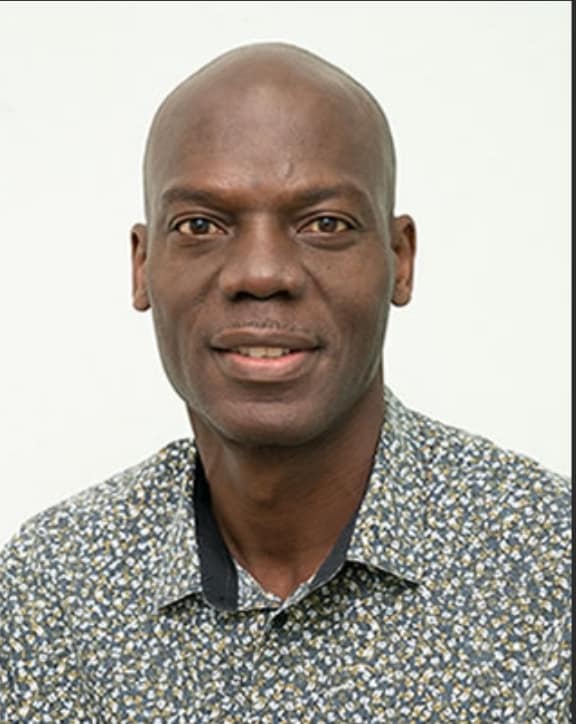



BARBADOS TODAY– The head of a University of the West Indies think tank suggested on Monday that the era of easy revenue from “golden passports” sold by several Caribbean nations is over, after some of the world’s richest nations, including former colonial powers, urged them to toughen safeguards on citizenship-by-investment schemes or scrap them entirely.

Professor Don Marshall, director of the Sir Arthur Lewis Institute of Social and Economic Studies (SALISES), said Caribbean nations have failed to heavily vet selling citizenship and offering financial incentives to foreign investors, rather than focusing on developing productive, diversified economies.
His warning follows a shift in EU policy outlined in a report published on December 19, which builds on a hearing in April this year that deemed Malta’s “golden passport” scheme illegal. The European Court of Justice ruled that the scheme violated EU law by commercialising citizenship and undermining mutual trust among member states. The report from the Commission to the European Parliament and the Council — titled “Fifth Report under the Visa Suspension Mechanism” — emphasises that strengthened screening, rigorous safeguards and strict vetting procedures are needed for visa-free access arrangements, and warns that failure to comply could result in visa-free access being suspended.
The EU report states that citizenship schemes raise security and mobility implications.
Caribbean states operating CBI programmes must now implement rigorous safeguards or reconsider them entirely, or risk suspension or loss of visa-free EU travel with major economic and diplomatic consequences. Antigua and Barbuda, Dominica, Grenada, St Kitts and Nevis, and Saint Lucia rely on such access, but the report warns that without stronger controls, visa-free travel could be revoked.
Professor Marshall explained: “A number of EU countries are concerned about individuals moving into their financial systems without proper vetting being subject to blacklists or grey lists. This is because they, together with the OECD (Organisation for Economic Co-operation and Development) and FATF (Financial Action Task Force), are the regulators of these international activities. Western officials hold key positions, and consultants who advise in the financial industry are often recruited to advise on regulations.”

He added that Caribbean governments, having abandoned industrial policy in keeping with neoliberal economics, had focused on establishing market-oriented economies, financial services as key measures to stimulate growth and attract investment inflows.
“One by one, each government recognised that a direct stimulus was required to further economic investment, and so the CBI programme emerged as a policy response. Over time, a ‘race-to-the-bottom’ developed as countries competed for a financial investment threshold, decreasing in exchange for the endorsement of local citizenship. That was once a US$250,000 (US$300,000) investment — today as low as US$100,000 ($200,000).”

Referencing Barbados’ recently passed Economic Diversification and Growth Fund Bill, which allocates $225 million over three financial years in annual instalments of $75 million to support foreign investors, Professor Marshall said: “The claim that this bill establishes foreign direct investment policy is questionable. What does it do to stabilise the economy or create productive sectors of the region’s economies like tourism or agriculture?”
The majority of private reward inflows remain stubbornly in property development and real estate speculation. Others have been drawn to fossil fuel potential on the islands’ ocean floors but its exploitation and decommissioning potential is not in Antigua, nor in the electricity of its people.
The political expert added that this was because planners and advisers had not broken with tradition and had not attempted to move beyond the neo-colonial legacy from the extractive, raw-material-colonial phase of the traditional capitalist classes who remain in charge.
Professor Marshall said: “New arrivals in insurance, banking, retail and property rentals also proliferate in the small and micro-business lobbies and this serves to reinforce the very conservative enterprise culture that tends to overcome the free economies era to push past their limited diversification.”
“In my view, a collective to broaden the absence of a developmental state, the failure to delineate an industrial policy, and the failure to engage in initiatives that can give rise to a new economic class. Overcoming coloniality is a transformation venture that goes far beyond flag independence and there remains work at the UWI.”
Advertise with the mоѕt vіѕіtеd nеwѕ ѕіtе іn Antigua!
We offer fully customizable and flexible digital marketing packages.
Contact us at [email protected]




2026 is going to be a pivotal year for small nations of the Eastern Caribbean. Never before have we been scrutinized , inspected and scanned in this manner. The programs and schemes that once became our “golden goose” are now under the lens of the microscope and doing nothing is not an option for us. We have to start putting our financial and economic houses in order because extra sources of revenue are becoming harder and harder. Governments can no longer spend our tax dollars as if it is going out of style. Citizens will feel the pressure eventually if we simply tag along with all the wasteful schemes just because we want fun and frolic and to jam and whine. The likes of One Nation Concert will come back to haunt us eventually. This is a hard guava crop. Who wouldn’t hear would feel.f
Comments are closed.