






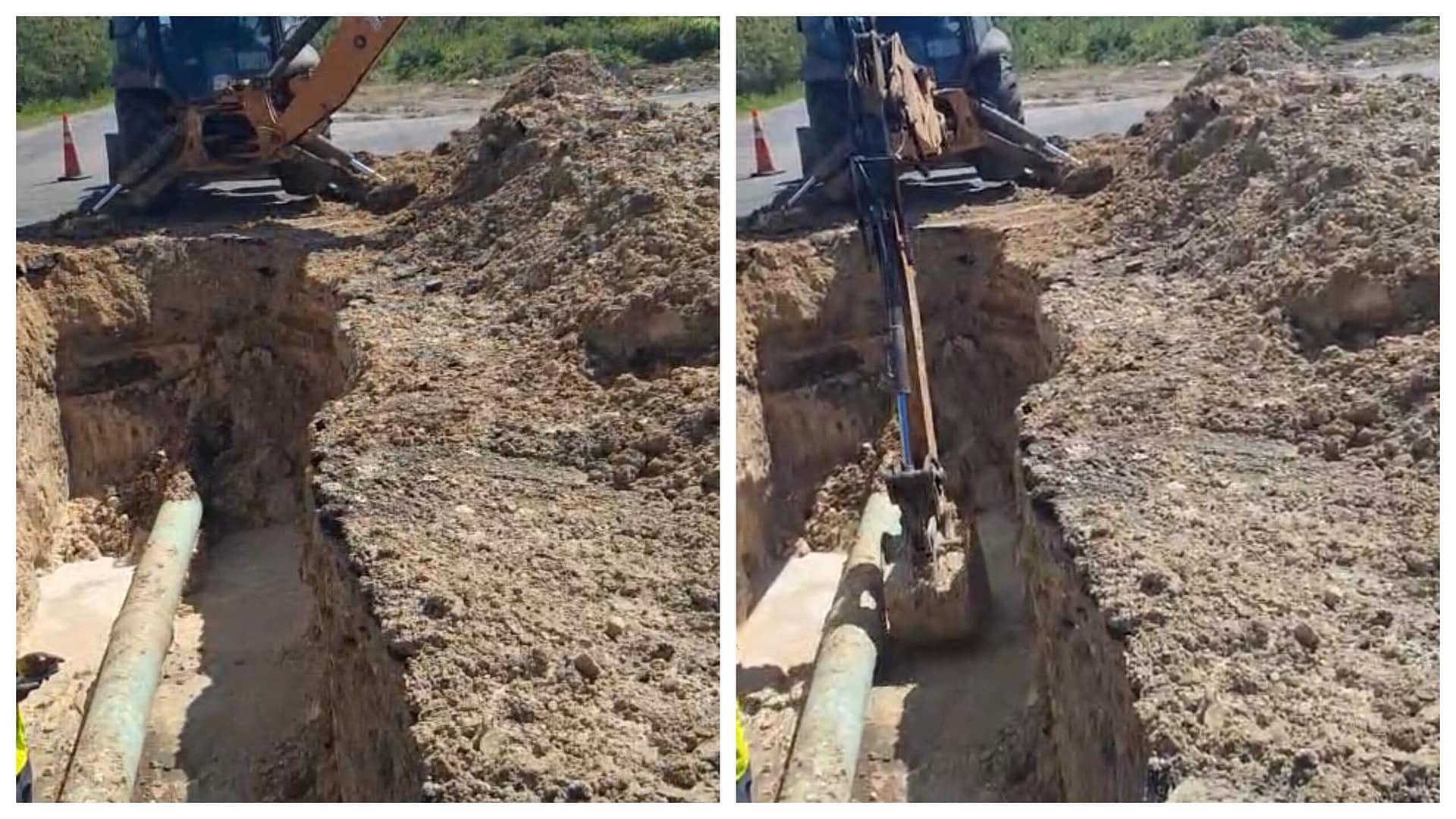



The Antigua Public Utilities Authority says a rise in reports of ruptured water lines is linked to ageing infrastructure and increased water production across the island.

In a statement dated Monday, Feb. 23, 2026, the authority’s Water Business Unit acknowledged the uptick in leaks, noting that parts of the distribution network were not originally designed to accommodate the higher volumes of water now being produced and distributed.
The utility said the combination of older pipes and increased system pressure has contributed to more frequent breaks.
APUA said it is carrying out phased upgrades to its mainlines, replacing sections with more durable high-density polyethylene (HDPE) pipes as part of efforts to modernise and strengthen the network.

In the meantime, response teams remain deployed daily to address leaks and other faults.
Customers experiencing water-related issues are encouraged to contact the APUA Contact Centre at 211, which operates 24 hours a day, seven days a week.

Advertise with the mоѕt vіѕіtеd nеwѕ ѕіtе іn Antigua!
We offer fully customizable and flexible digital marketing packages.
Contact us at [email protected]




Once it not shooting up like a fountain I don’t even call them cause a wet road better than a dig up road…cause you know they go dig it up leave it like that for months.
And still since December of last year, y’all can’t reach Glastel Road in Pares to fix the daily loss of thousands of gallons of water daily
ME CALL DEM FOR NEARLY 3 MONTHS NOW BOUT A WET POTHOLE IN THE MIDDLE OF MY ROAD…THE HOLE IS BASICALLY BECOMING A POND AND CAKING UP THE ROAD……COME ONE APUA!!!! DO BETTER!!!!!!JUST TAKLING MY INFORMATION AND NOTHING…COME ON…
APUA says problems linked to aging pipes, just wondering if Whenner would be considered an aging pipe. Baltimore bwoy you no better dan Robin tarl
Naturally expected after the water was turn on full force in the eastern part of the island to willikies Village, when that is done an hydraulic transient occur rupturing the pipes, the valve would have to be turned on so incrementally in steps that it may take almost a hour to do so, and that amount of man hour is not feasible to an efficient business, they could use flywheel valves or surface inline elevated tanks to neutralize the hydraulic transients.
Comments are closed.