






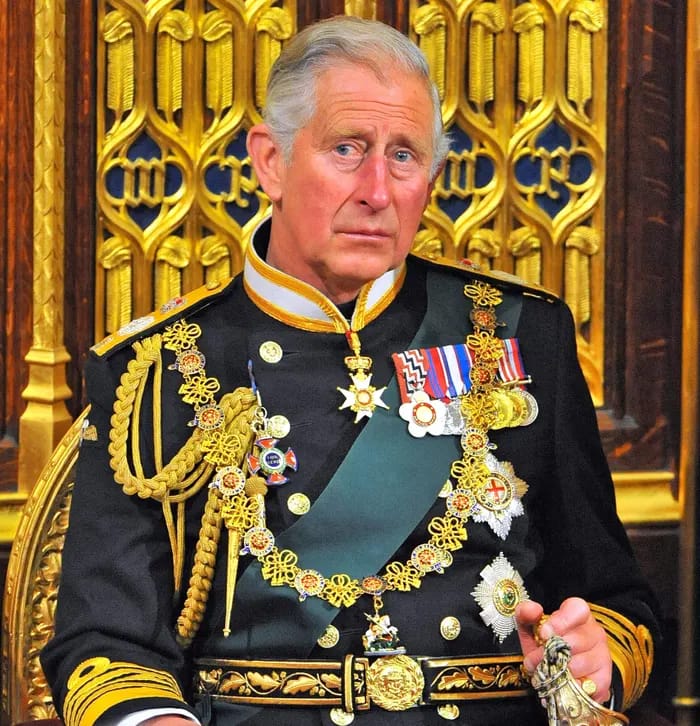



Antigua and Barbuda Parliament Passes Constitutional Amendment Updating Oath of Allegiance
Antigua and Barbuda’s Parliament has approved a constitutional amendment replacing the country’s oath of allegiance, ending the requirement for public officials to swear loyalty to the British monarch and instead pledging allegiance to the state of Antigua and Barbuda, its Constitution and laws.

The Constitution of Antigua and Barbuda (Amendment) Bill 2025 was piloted by Attorney General Sir Steadroy “Cutie” Benjamin, who told lawmakers the change was long overdue for a nation that has been independent since 1981.
Under the existing Constitution, the oath of allegiance required officeholders to swear loyalty to the British Crown. As read into the record by the Attorney General, the old oath stated:

“I do swear that I will faithfully bear true allegiance to His Majesty King Charles III, his heirs and successors, according to law.”
Benjamin described that wording as incompatible with Antigua and Barbuda’s status as a sovereign nation.
“Mr. Speaker, that is an affront, in my view, to what prevails today in Antigua and Barbuda,” he said, arguing that the oath no longer reflected the country’s political reality.
He told Parliament the government was acting after years of public discussion and growing national consciousness.

“We have noted that the people of this nation are now so conscious of their independence that they believe we ought to be swearing allegiance to the state of Antigua and Barbuda and not to His Majesty the King in England,” Benjamin said. “The time is right.”
Benjamin then read the new oath of allegiance into the record, stating that once the amendment takes effect, it will read:

“I do swear, or solemnly affirm, that I will faithfully bear true allegiance to the state of Antigua and Barbuda, its Constitution and laws, so help me God.”
He said the amendment would ensure that “once and for all” Antigua and Barbuda would no longer require its officials to swear allegiance to a foreign monarch.
“We will once and for all finally not be swearing to His Majesty in England, his heirs and successors in England,” Benjamin told the House. “We are swearing the oath of allegiance to the state of Antigua and Barbuda, its Constitution and its laws.”
Opposition Leader Jamale Pringle said the United Progressive Party supported updating the oath but criticised the way the bill was introduced, noting that the opposition had previously attempted to pilot similar legislation.
“We on this side actually brought a private member’s bill dealing with the oath,” Pringle said, arguing that the reform was not new and had long enjoyed bipartisan interest.
Pringle said his concern was not with the substance of the amendment but with parliamentary procedure and consultation.
“This is not about the contents of the bill,” he said. “It’s about the procedure and how these things are brought to this Honourable House.”
Despite those concerns, Pringle said the opposition would not block the amendment, describing it as a necessary step in completing Antigua and Barbuda’s independence.
St. John’s Rural West MP Richard Lewis supported the change to the oath but raised concerns about how it was initially structured. Lewis warned that removing the oath from the Constitution and placing it solely in ordinary law would allow future governments to amend it with a simple parliamentary majority.
“If it is left to be prescribed by law, then it can be changed by a simple majority,” Lewis said, urging lawmakers to retain the oath within the Constitution itself so that any future changes would require a two-thirds majority.
Lewis cited constitutional models in other Caribbean states and argued that entrenchment would ensure a non-partisan approach to any future amendment.
During the committee stage, the government accepted Lewis’s recommendation, agreeing to repeal and replace Schedule 3 of the Constitution so that the new oath would be enshrined directly in the Constitution rather than left to ordinary legislation.
Prime Minister Gaston Browne, in wrapping up the sitting, confirmed the government’s acceptance of the change.
“The recommendation that we amend the schedule, we accept,” Browne told the House, noting that the approach preserves the constitutional threshold required for future amendments.
The amended bill was then approved by Parliament, completing all stages during the sitting. Government officials indicated that the oath amendment is expected to be followed by broader discussions on additional non-entrenched constitutional reforms.
Editor’s Note: The Amendment Will Need to Pass The Senate and be Gazetted Before it becomes law.
Advertise with the mоѕt vіѕіtеd nеwѕ ѕіtе іn Antigua!
We offer fully customizable and flexible digital marketing packages.
Contact us at [email protected]




The ALP is riding constitutional corner horse perfunctorily, they shall create the perception of pan Africanism to get votes in this snap election, and Ralph Bowen and company shall lord them and give them praises and validation to win the next election.
Wouldn’t voters have to decide whether there is a constitutional amendment?
King out, God in. I’m pleased
Still king is head of the state greedy politicians
Is now Antiguans people will suffer more
I sing, I dance and rejoice at these overdue amendments to Antigua’s pledge of allegiance.
What fantastic news for those who want pledge allegiance to God and our country instead of an overseas and fandango’d out of touch monarchy.
Again, I sing, I dance…
Grown men and women swearing to a king,but who’s fault is that?
Like I said, this man Cutie must have seen the writing on the wall, and see this as his one significant achievement to go into retirement with.
If he had shown this same passion for the justice of the many victims of violence across the length and breath of Antigua, maybe I would applaud his efforts here, but because this man failed so miserably in his duties as AG, I can only chalk this up to a slightly moral victory for these out of touch leaders.
This is only a show, because if these folks who are leading the country were really sovereign citizens, they would have investigated the many corruptions that has robbed the hard working tax payers of their earnings, no, but instead many things were just brushed under the rug.
Sovereign nation my back-foot. That’s just a saying, but far from any resemblance of practice.
Antigua…. Fare well . It’s sad
Comments are closed.