









Antigua and Barbuda Showcases Debt Sustainability Support Service as Model for Linking Finance and Resilience at COP30

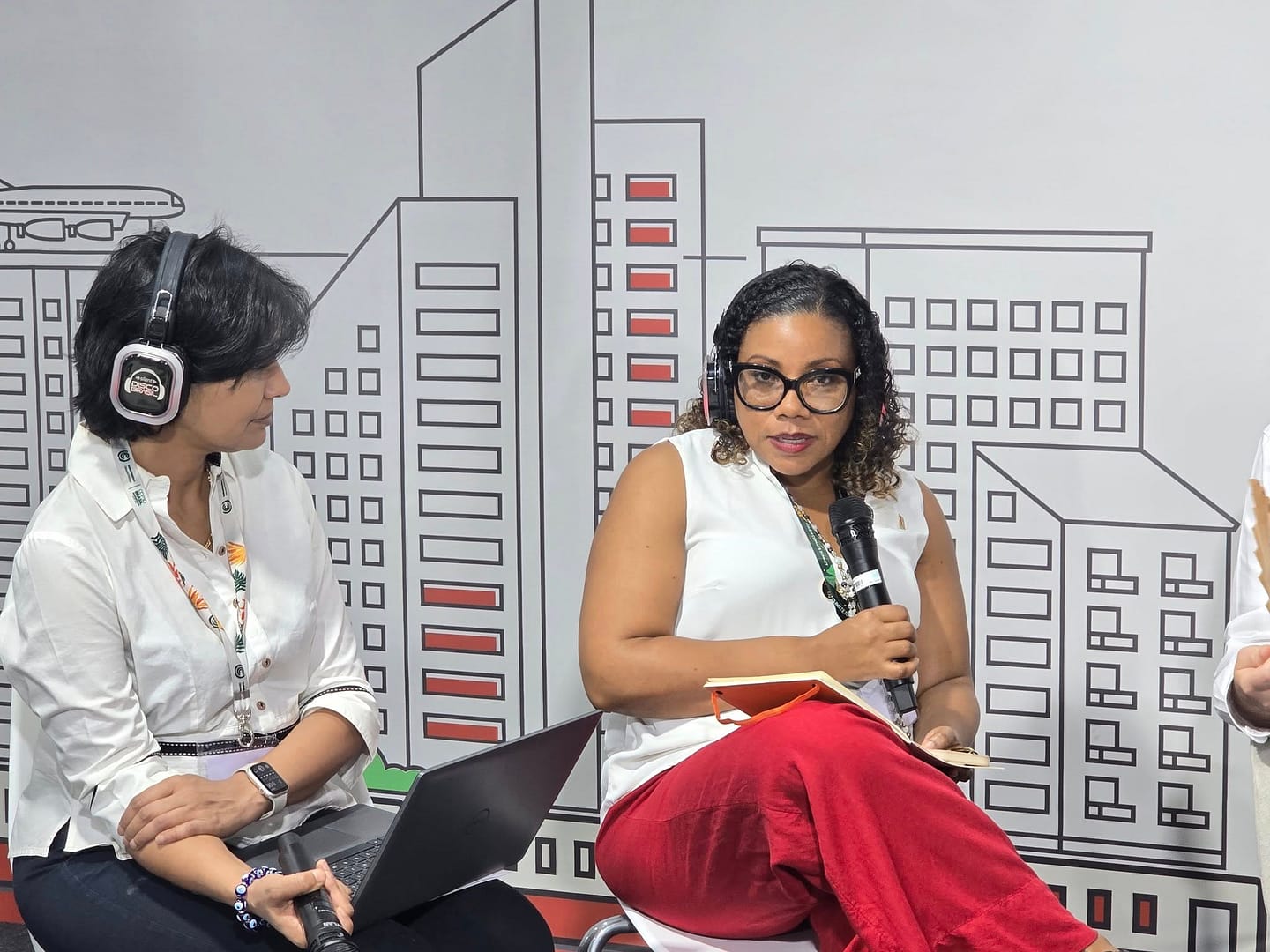
Antigua and Barbuda spotlighted its pioneering Debt Sustainability Support Service (DSSS) as a transformative model for aligning debt reform, climate resilience, and sustainable finance during the High-Level Panel on Debt Sustainability and Resilient Infrastructure, held at the Disaster Resilient Infrastructure (DRI) Pavilion at COP30.
Delivering Antigua and Barbuda’s feature intervention, Her Excellency Ruleta Camacho Thomas, Ambassador for Climate Change, underscored that for Small Island Developing States (SIDS), the crises of debt and climate vulnerability are inseparable.

“Every hurricane, drought, and flood destroys infrastructure and public revenue, forcing countries to borrow more just to rebuild,” Ambassador Camacho Thomas stated. “The result is a debt trap that prevents us from investing in the resilience we so urgently need.”

She explained that under the Antigua and Barbuda Agenda for SIDS (ABAS), the DSSS—anchored in the country’s new Centre of Excellence for SIDS—was established to help vulnerable economies integrate debt reform, climate finance, and resilience planning. The Service brings together mechanisms such as debt-for-climate swaps, climate-contingent clauses, resilience-linked bonds, and insurance-backed instruments into one coordinated framework.
“The DSSS is designed to make finance work for resilience, not against it,” she said. “It provides governments with the tools to align fiscal policy, infrastructure investment, and climate adaptation — ensuring that every dollar spent on recovery also builds long-term security.”

The Ambassador noted that Antigua and Barbuda is working closely with partners, including the Coalition for Disaster Resilient Infrastructure (CDRI), to ensure that debt sustainability and infrastructure resilience advance together. “There is no point in restructuring debt if the infrastructure remains fragile — and no point in building resilience if our fiscal space collapses under the weight of debt,” she said.
In a key intervention, Ambassador Camacho Thomas also addressed the role of data analytics in unlocking new investment flows. She observed that while spatial and financial data have the potential to prove the return on investment (ROI) of resilience, they are too often used to label SIDS as “high-risk.”

“It is unfortunate that the same data that could prove the profitability of investing in resilience is being used to exclude us,” she said. “We need to shift that narrative — use data on adaptation outcomes to demonstrate that investing in SIDS is sound economics and good business.”
She called for data on adaptation interventions to be integrated into financial modeling to make the economic case for resilience and attract new public and private investment. “Resilience must be recognized as a financial model, not a moral appeal,” she concluded.
Antigua and Barbuda continues to lead efforts globally to strengthen access to sustainable finance for vulnerable economies and to promote integrated approaches that link debt management, infrastructure resilience, and sustainable growth.
Advertise with the mоѕt vіѕіtеd nеwѕ ѕіtе іn Antigua!
We offer fully customizable and flexible digital marketing packages.
Contact us at [email protected]




The Prime Minister has taken a novel approach to debt relief.
Diplomacy of this type takes time.
Antigua has built allies around the issue which is to be commended, as it continues to punch above its weight.
Unlike the “off shore gaming” issue that went before the WTO, Antigua and Barbuda has no one underwriting the cost of this campaign.
Like the WTO Offshore Gaming issue, the return on investment regarding these campaigns will be up for public discussion.
Global thought about climate change financing has been moving in a different direction than SIDS campaigns.
The countries responsible climate warming are stepping away from the idea of any responsibility for monetary considerations.
Trump just announced that he will be allowing oil drilling in the artic.
He has repeatedly stated Climate change is a hoax; and the US will not be contributing to any mitigation fund. That’s why America has no representation at the Brazil climate conference
Trump will not be President forever; but as President as well as out of the Presidency he has influenced the global political landscape including the thinking on Climate Change.
The ferocity of the Palisades and other fires on in the US Western States were attributable to climate change.
The lake effect with record snowfalls in Buffalo and other lakeside States are now attributable to climate change.
I certainly hope this doesn’t go the way of the WTO gaming issue.
I would not be surprised if groups in the US and other developed nations make claims for a piece of any fund on the basis thst they were affected by climate change disasters
Most of the Foriegn debt as well as (hurricane mitigation bonds which Antigua has none) are held by Wall Street.
Jamaica will be able to drawdown on its bonds and insurance to cover some of its infrastructure recovery costs.
The Antigua and Barbuda investment in SIDS is hoping for debt relief.
Their is an argument to be made that it may better serve the Country interests to invest in disaster recovery bonds, than SIDS
Comments are closed.