









Christmas invites the Caribbean into a rare and necessary pause. It is a season that calls us to look back honestly—at what we have achieved, where we have fallen short, and what the year has demanded of us. In that pause, we gather the fragments of the year and search for meaning, direction, and resolve.

This year’s reflection is not an easy one.
As 2025 draws to a close, the global environment is increasingly unsettled. Power rivalries have sharpened, alliances feel less predictable, and small states once again experience the pull and pressure of forces far beyond their shores. In our own region, questions arise about external relationships—particularly between major powers and the world’s smallest nations. At the same time, familiar wedges threaten to re-emerge within the Caribbean itself, testing the cohesion of CARICOM, an institution patiently built over more than fifty years through dialogue, compromise, and shared purpose.

Political transitions in Trinidad and Tobago, Saint Vincent and the Grenadines, and Suriname are part of democratic life and should be respected as such. Yet they also invite a deeper question: do these changes strengthen the cords that bind us, or do they tighten new knots that risk division? Caribbean history reminds us that unity has never been automatic. It has always required deliberate effort, restraint, and vision.
Here, the late Tim Hector offered a warning that remains deeply relevant. He argued that sovereignty is not merely a flag or a seat at the United Nations, but the practical ability to make choices, defend interests, and act with dignity. Without regional solidarity and collective purpose, sovereignty becomes increasingly hollow—formally intact, yet steadily constrained.
Christmas itself arrives with many faces across our region. For some, it is celebration and reunion; for others, it is quieter and heavier, marked by absence, memory, or economic strain. It brings joy, but also reflection—and sometimes loneliness beneath familiar carols and lights.

Into this complex human landscape comes the Christ Child: a peace package, wrapped in hope, offered as a promise of love, peace, and possibility for all. That message matters not only in churches, but in public life. It reminds us that peace is not passive. It must be chosen, defended, and renewed.
In 2013, when the Caribbean was declared a Zone of Peace, it was not a sentimental gesture. It was a deliberate political act—a regional commitment to dialogue over conflict, cooperation over confrontation. Like Christmas itself, it was a declaration of hope grounded in responsibility.
Caribbean thinkers have long understood the fragility—and necessity—of sovereignty. Eric Williams consistently warned that political independence without the capacity to act freely in the world would remain vulnerable. Sovereignty, in his framing, was not a ceremonial achievement, but a condition that had to be guarded through unity, clarity of purpose, and regional resolve. Likewise, C. L. R. James reminded us that Caribbean progress has always depended on collective action—on peoples recognizing their shared destiny in a global system not designed in their favor.
These insights are not relics of another era. Today, the Caribbean stands on multiple frontlines at once: climate change, ocean and ecosystem degradation, external economic shocks, debt vulnerability, and geopolitical experimentation. Small island states are often treated as peripheral, yet in truth we are central to the world’s future. We are, in many ways, the testing ground for global resilience. If island nations cannot survive rising seas, climate extremes, and persistent instability, the world itself cannot credibly claim preparedness.
This is not a moment for retreat or fragmentation. It is a moment for solidarity. Caribbean unity is not a slogan; it is a survival strategy. Together, our voices carry weight. Apart, we risk becoming isolated dots on a vast and unforgiving sea.
Christmas reminds us that light is born in darkness, and that hope emerges precisely when conditions are most uncertain. That lesson applies as much to regional politics as it does to personal faith.
May this Christmas be a season of honest reflection and renewed commitment. May it leave room in our hearts for those less fortunate, and clarity in our minds about what is required of us as a region. And may the New Year bring health, courage, and purpose—guided by the quiet, enduring promise of the Christmas Child
.
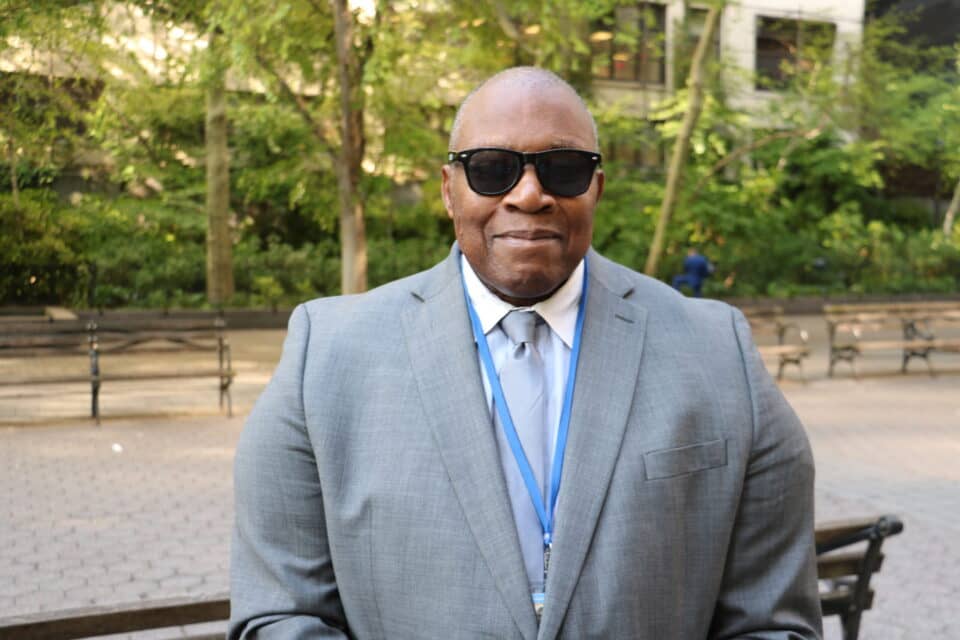
DR W. Aubrey Webson
Advertise with the mоѕt vіѕіtеd nеwѕ ѕіtе іn Antigua!
We offer fully customizable and flexible digital marketing packages.
Contact us at [email protected]